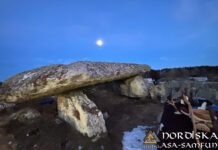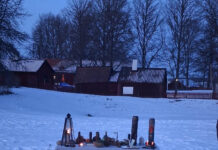
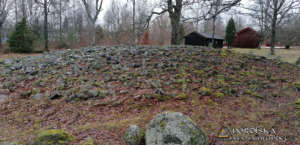
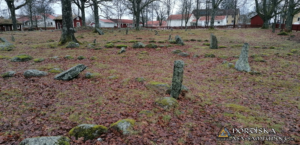
On Saturday, January 18, we held our midwinter blót at Lenhovda burial ground, Sweden, which is quite a large burial site located in a relatively compact and central area within the local heritage park in Lenhovda. It was my first time visiting, and I was struck by the sheer number of Bronze Age and Iron Age graves in the burial ground. In total, there are about 170 ancient remains, with 148 of them consisting of oval and ship-setting-like stone formations. Additionally, there are fourteen cairns, seven tridents (triangular stone formations), and one three-sided stone setting. The ship-like graves range from four to nine meters in length, with several of them featuring distinct prows. The sides of the trident measure between ten and thirteen meters, with their points marked by standing stones. It is believed that the large burial cairns date back to the Bronze Age, while the other graves originate from the Iron Age.
It is estimated that there were originally around 300 graves at the site, making it an excellent and highly interesting place to hold a blót—so much power, over a thousand years of history in this place… A truly powerful location.
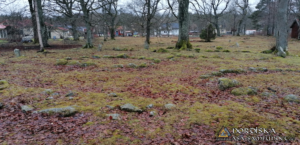
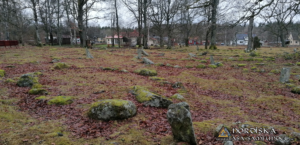
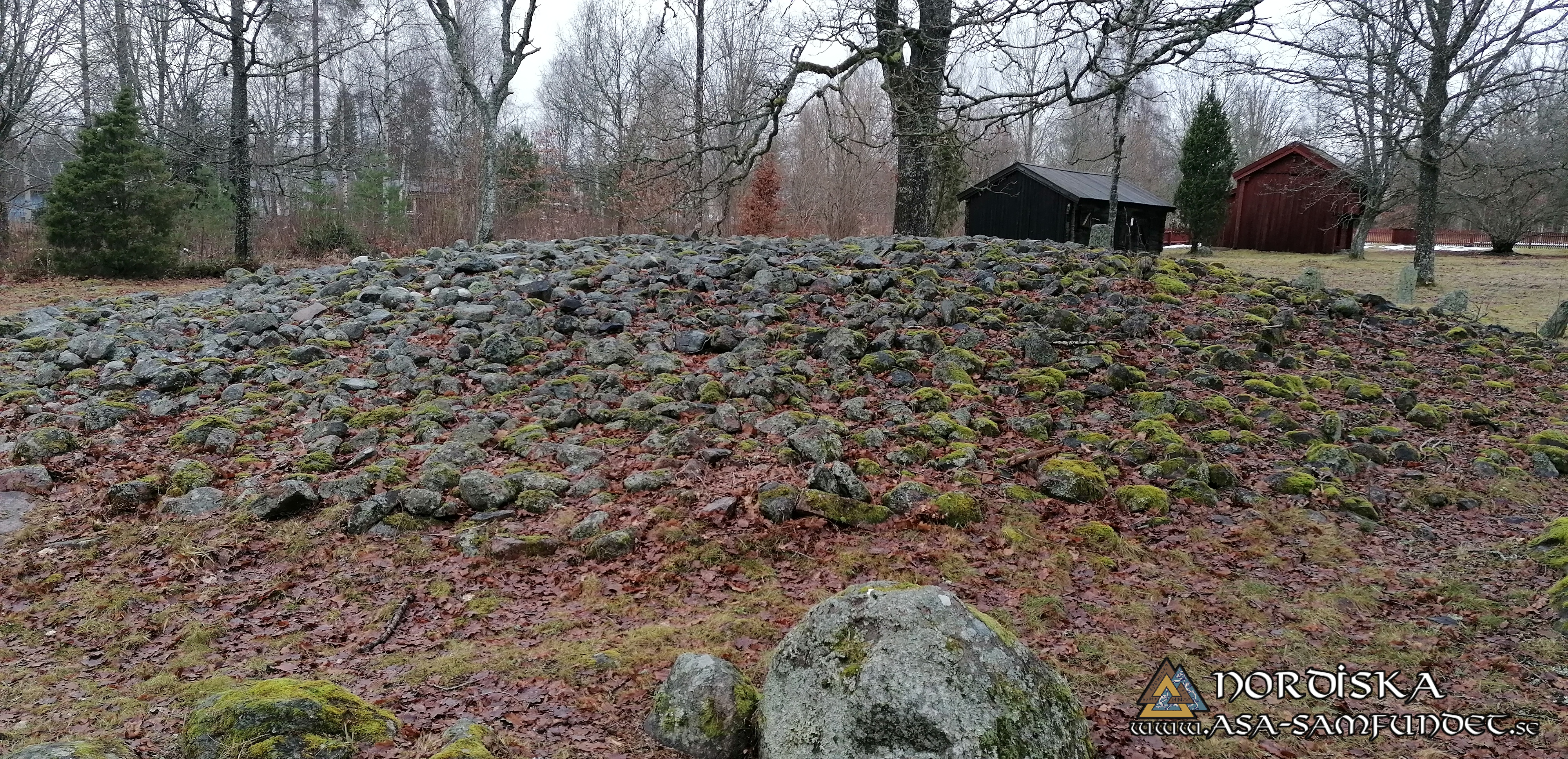
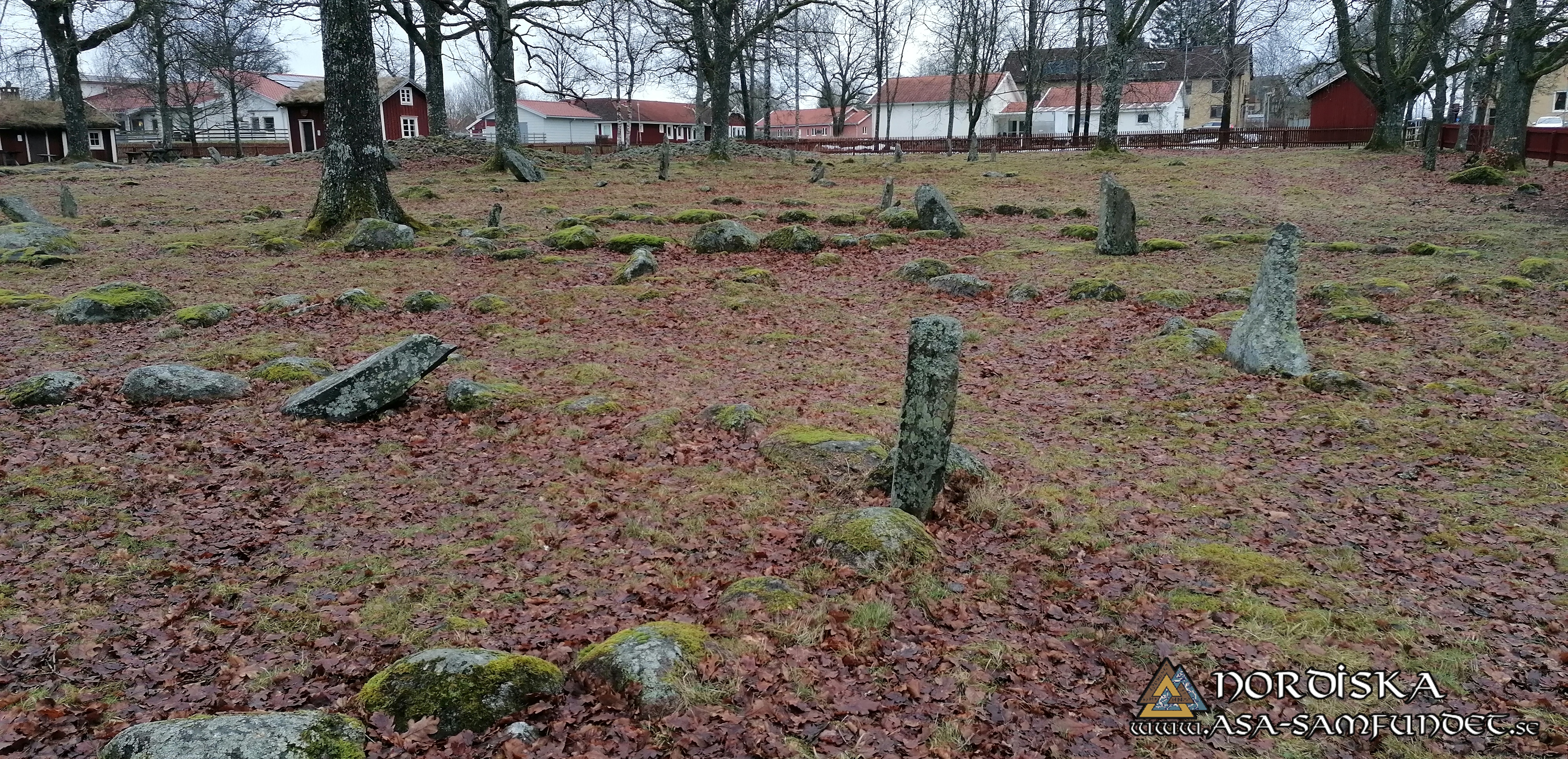
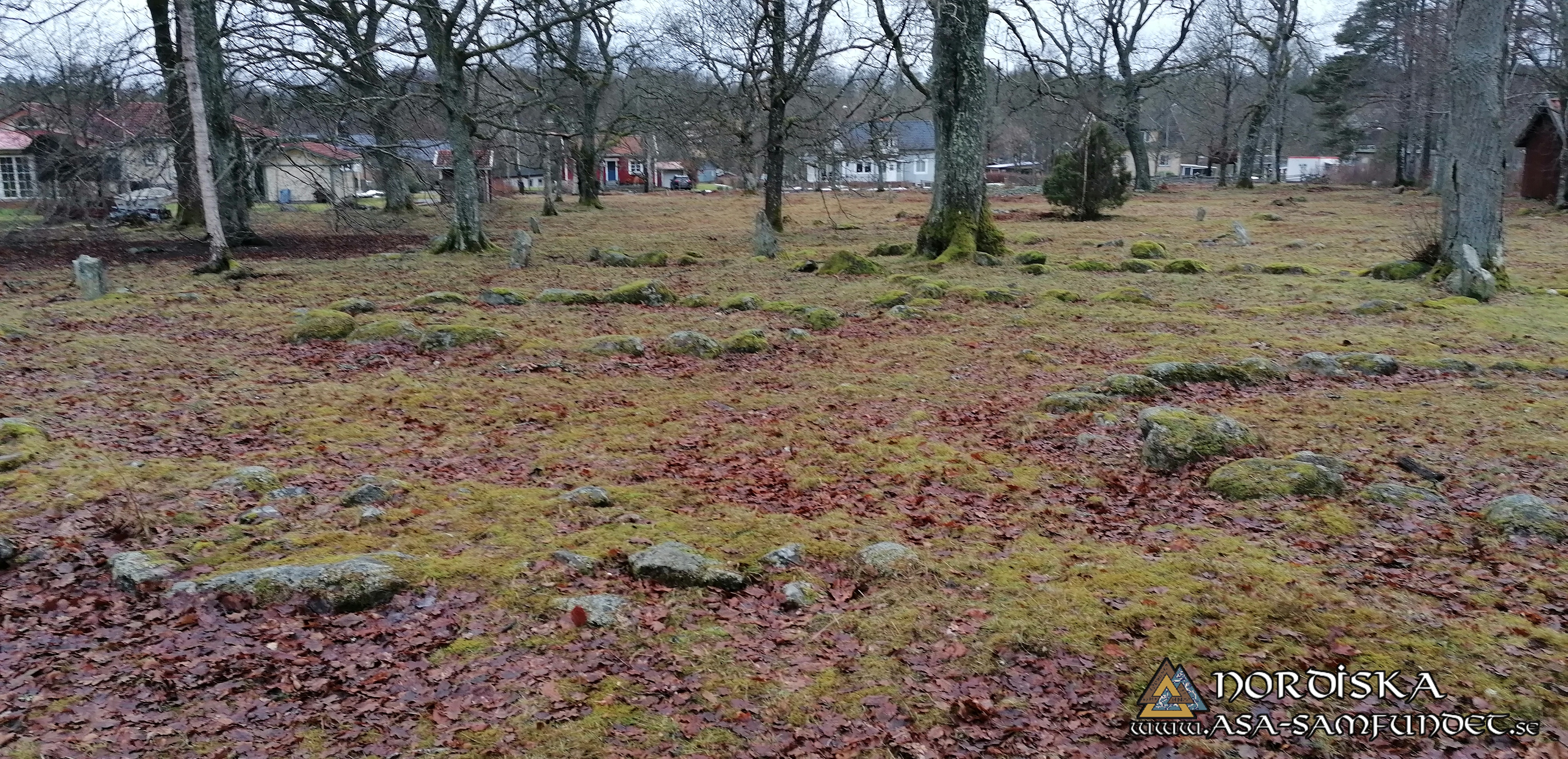
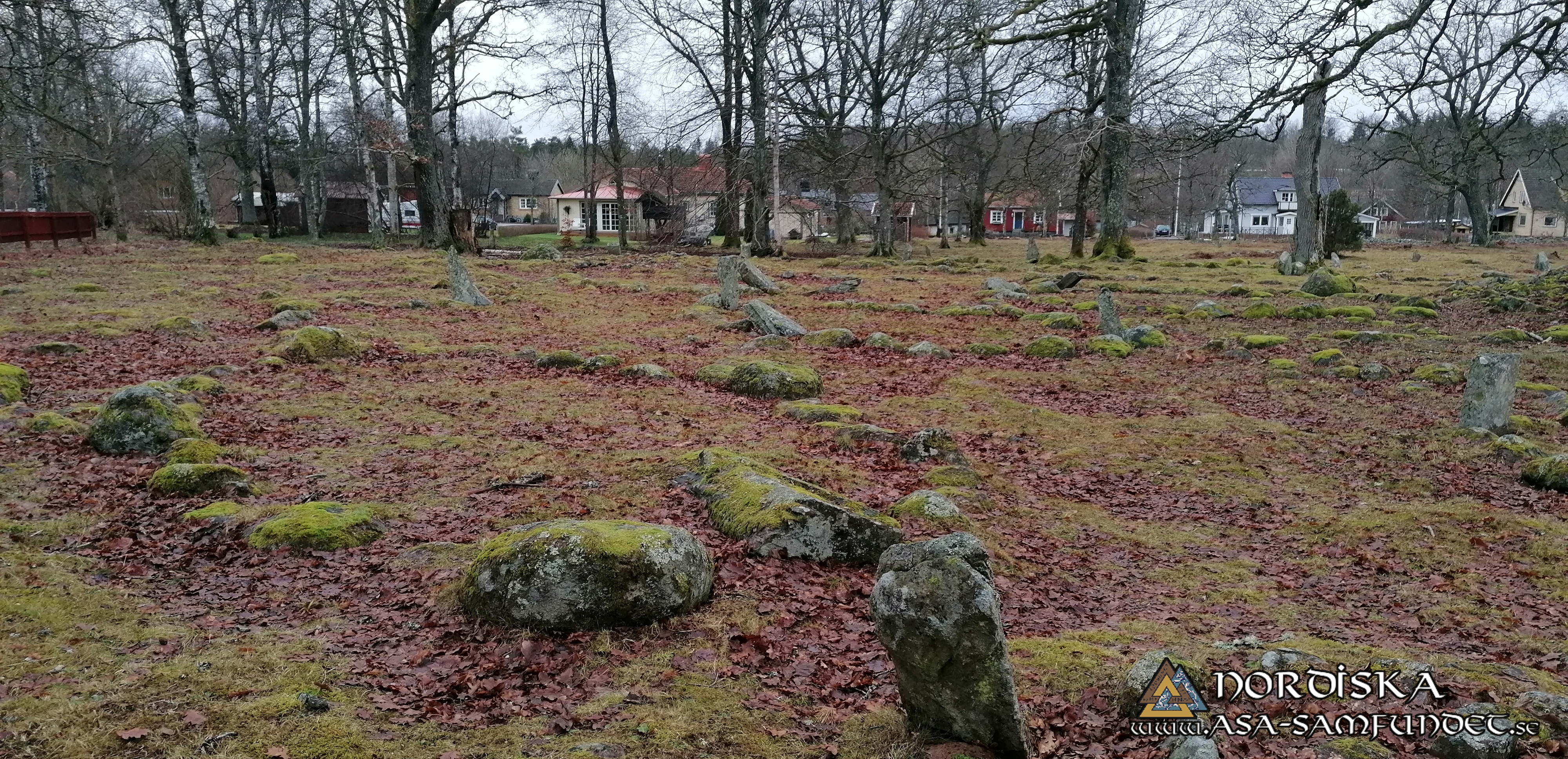
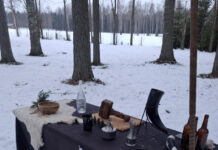
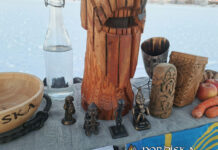
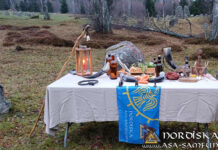
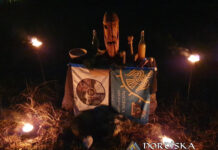
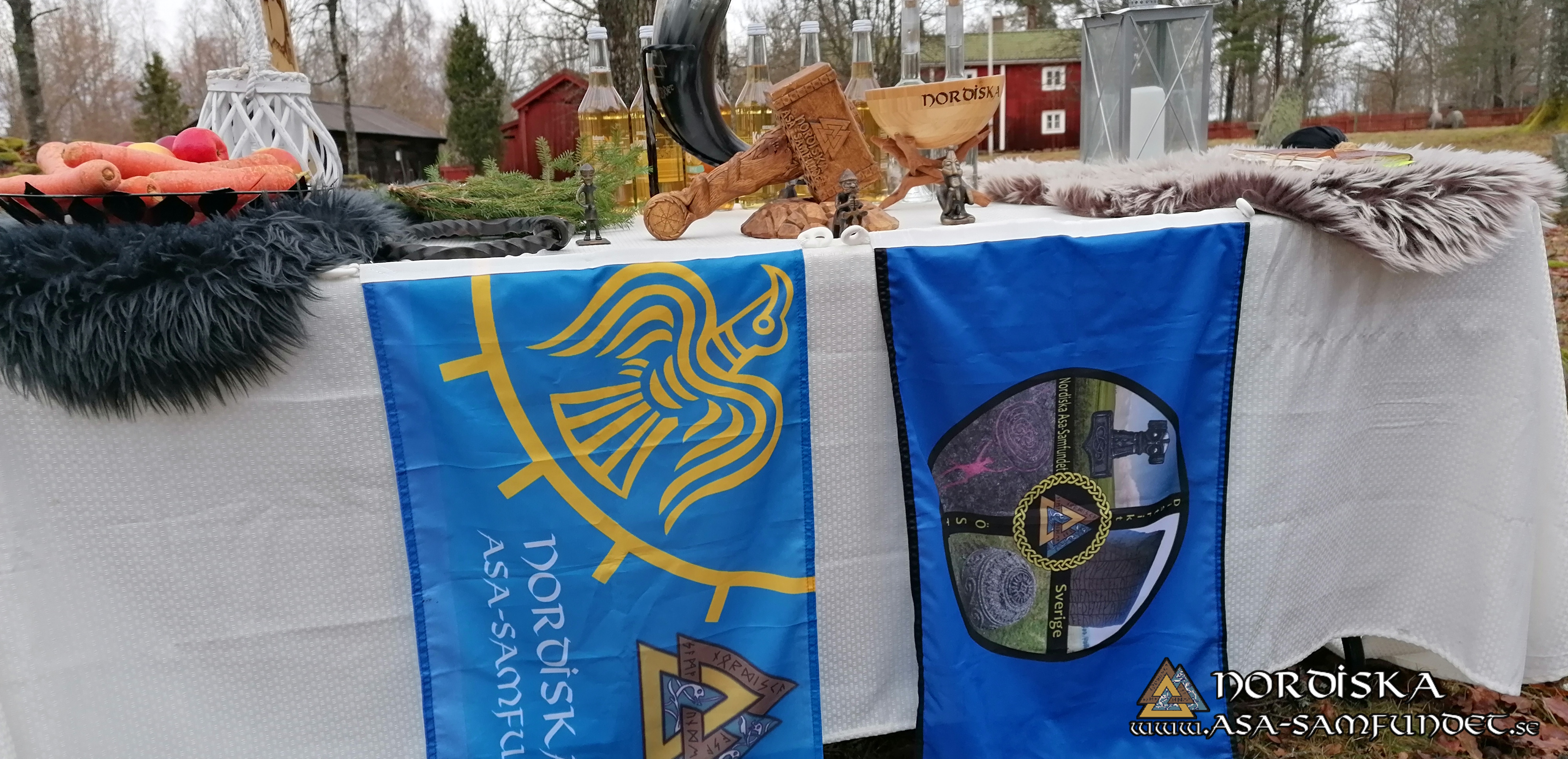
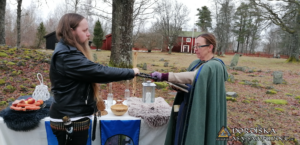
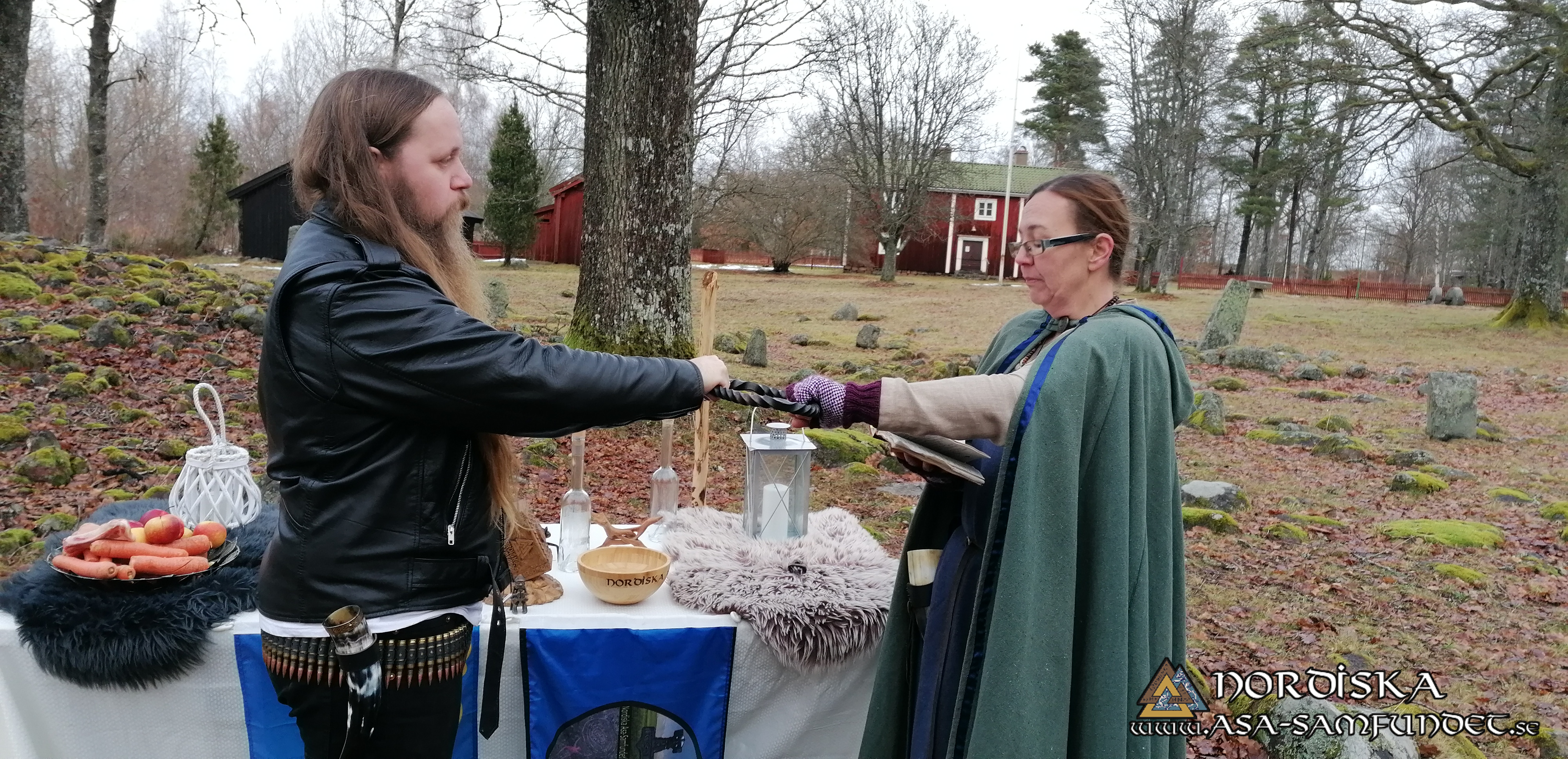
The blót table was placed within one of the ship-setting-like stone formations so that the ritual circle would be inside, protected by the grave’s stones and the flames of the torches. While the blót table and other preparations were being arranged, event organizer Tomas shared some history about the site with those already present. Of course, this was also a good opportunity to walk around and take “some” photos.
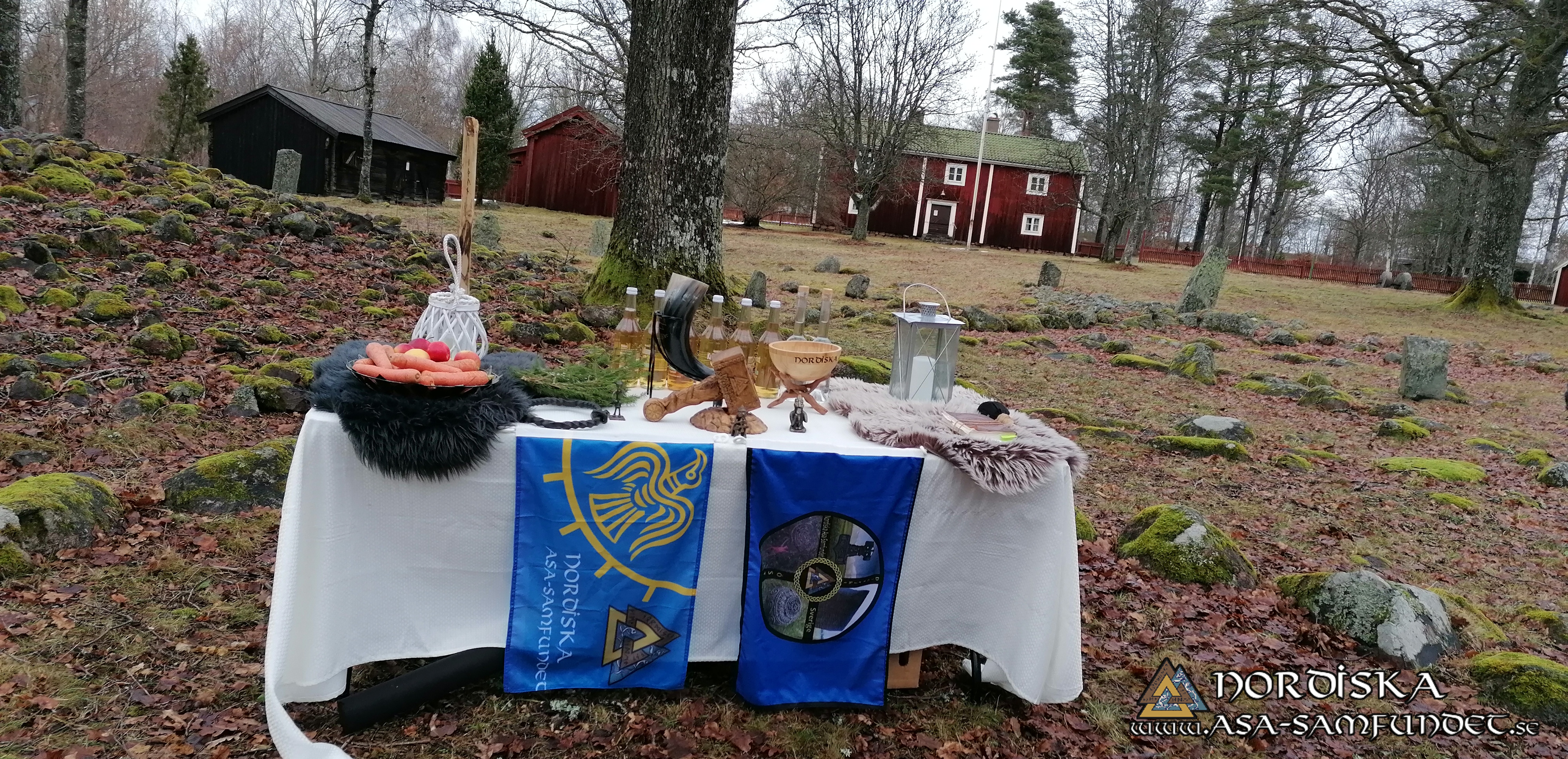
The weather could have been better—it was damp, cold, and windy, with bare ground. Attending a midwinter blót without snow at least a decimeter thick felt a bit off; it was more like autumn or early spring weather rather than midwinter. In previous years, we have always had plenty of snow at our midwinter blóts, but you can’t have everything.
A group of people showed up, the circle consisted of 7 participants plus the blót officiant, Lena Salomonsson, and assistant, Kicki Bogren. There were both familiar faces and some new ones, which is always great. After all, we in the blót kindreds want to attract new participants to our blóts.
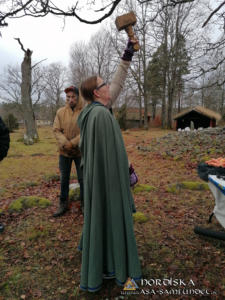
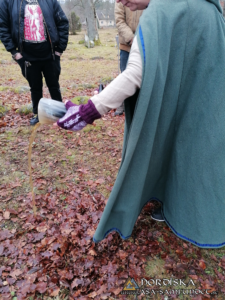
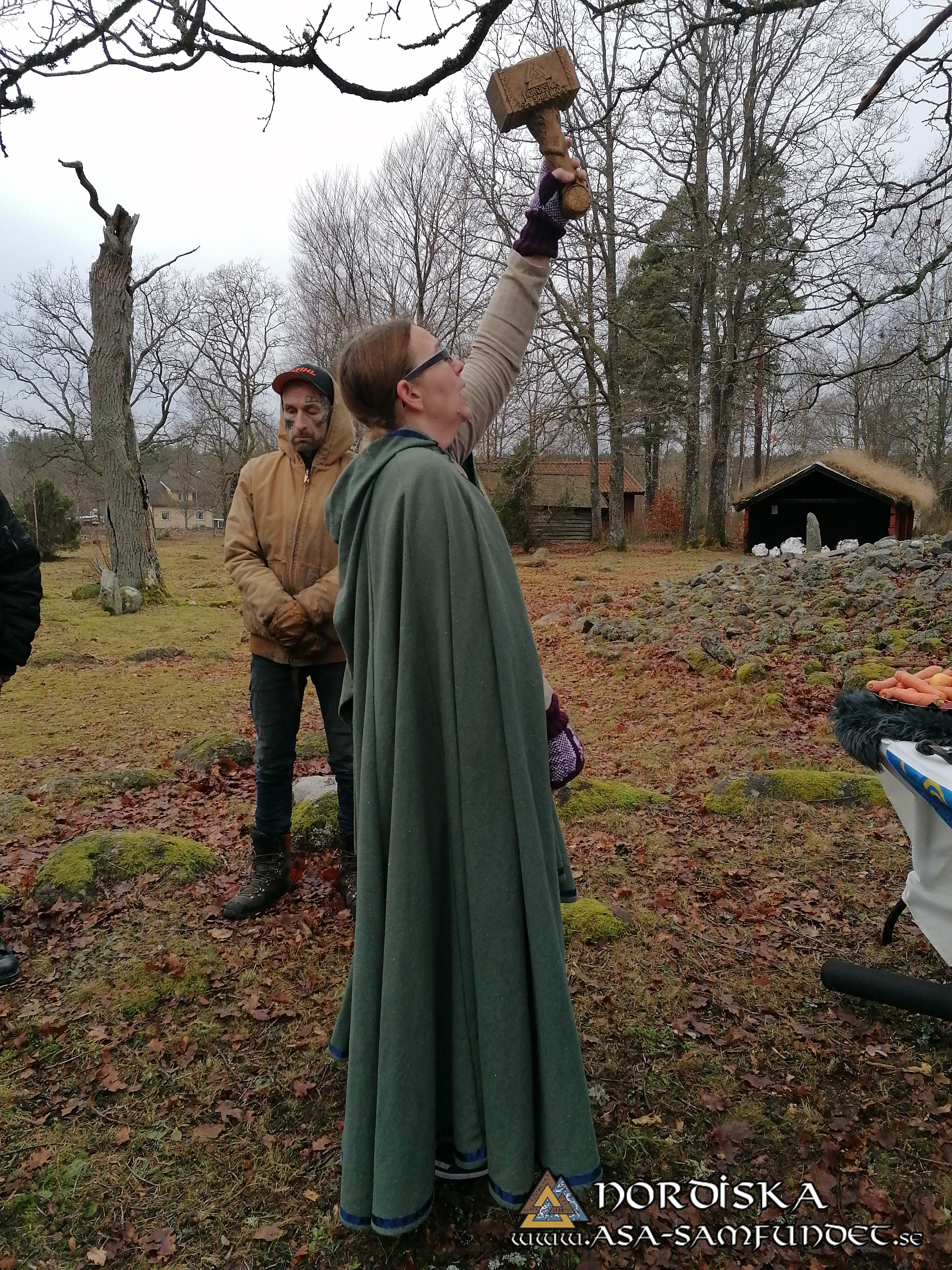
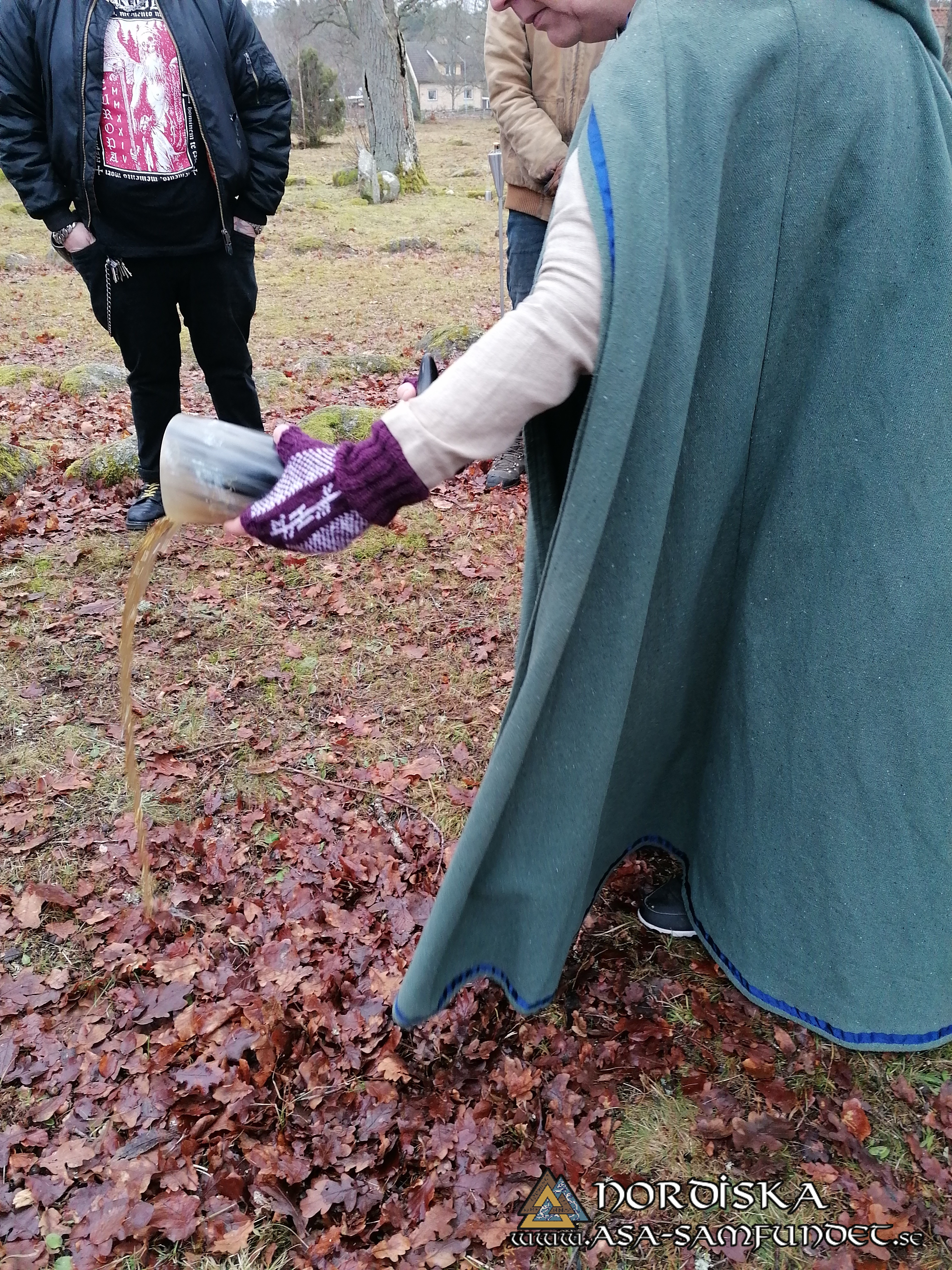
As always, the blót was carried out in an honorable and proper manner by Lena and Kicki. Holding the blót within a ship-setting made it feel even more powerful—you could sense the energies of the land, the spirits of the place, the disir´s and the ancestors who is buried there.
Toasts were raised to various gods and powers by the participants. Personally, in previous blóts, I have mostly made offerings to the powers I feel most connected to or those I need at the moment. However, recently, I have started to make offerings to the deities specific to each blót, according to what can be found in historical sources. This time, I offered to Freyr for a good upcoming harvest, as well as to the Yule god, Jólnir. Lena also shared more about the meaning and history of the blót, mentioning that certain traditions recorded in the late 900s continued all the way into the late 1800s—perhaps even into the early 1900s. This is something to reflect on in times when our ancient monuments are being exploited for the sake of roads, railways, and housing developments.
After the blót, an initiation ritual was performed. This is a ceremony where a person renounces any previous faith and is initiated before the gods into our ancient Nordic faith—Asatru. It is a beautiful ritual that, despite its simplicity, is very powerful. Those who undergo this ritual often describe it as deeply transformative, feeling a surge of energy from the gods, a sense of inner relief, and a profound calm settling over them when it is completed.
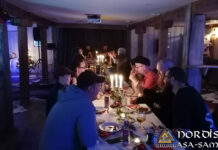
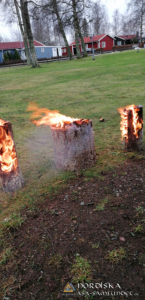
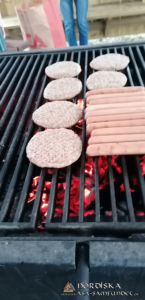
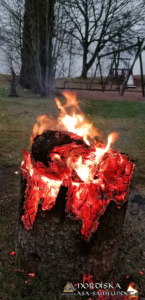
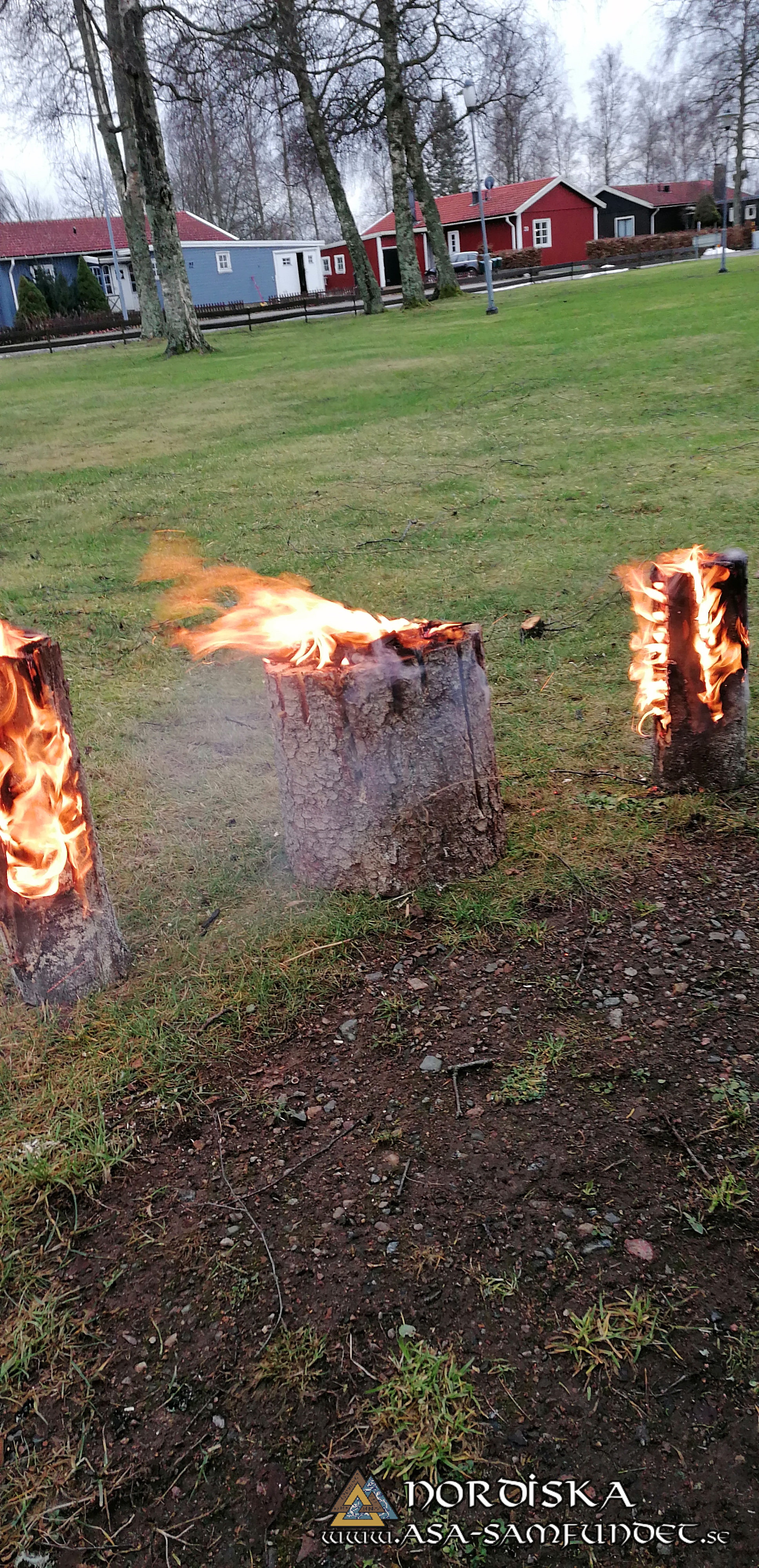
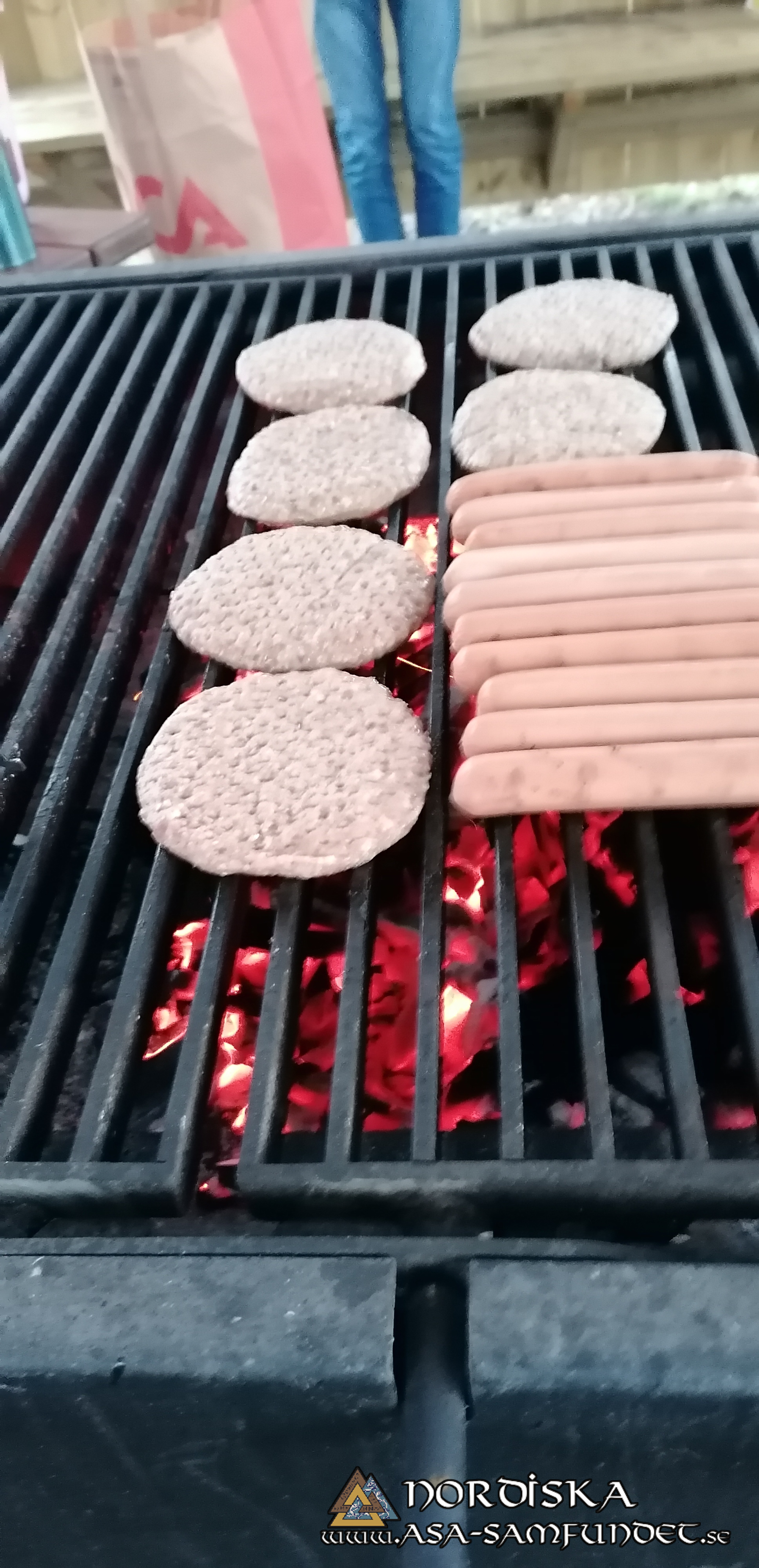
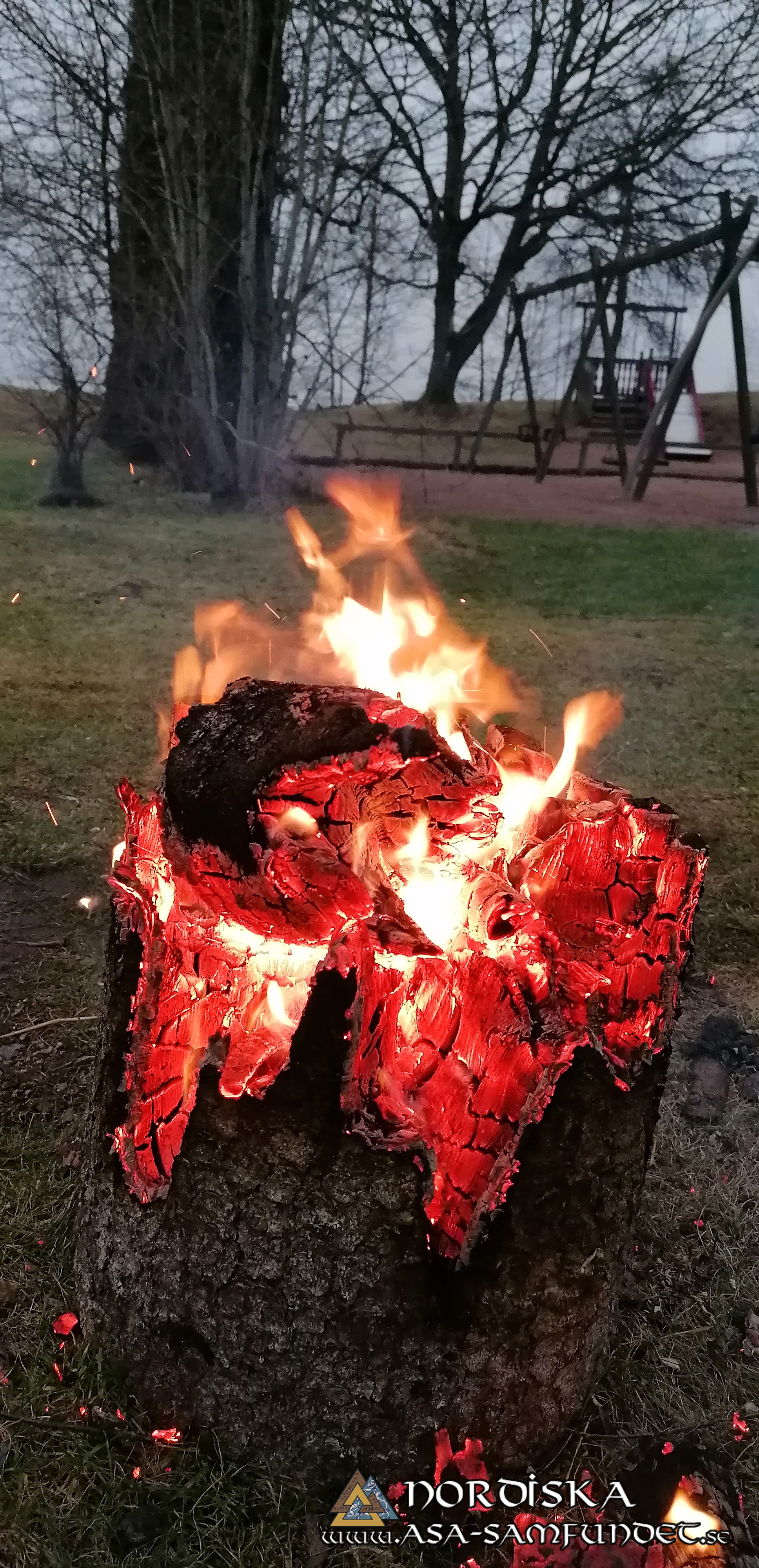
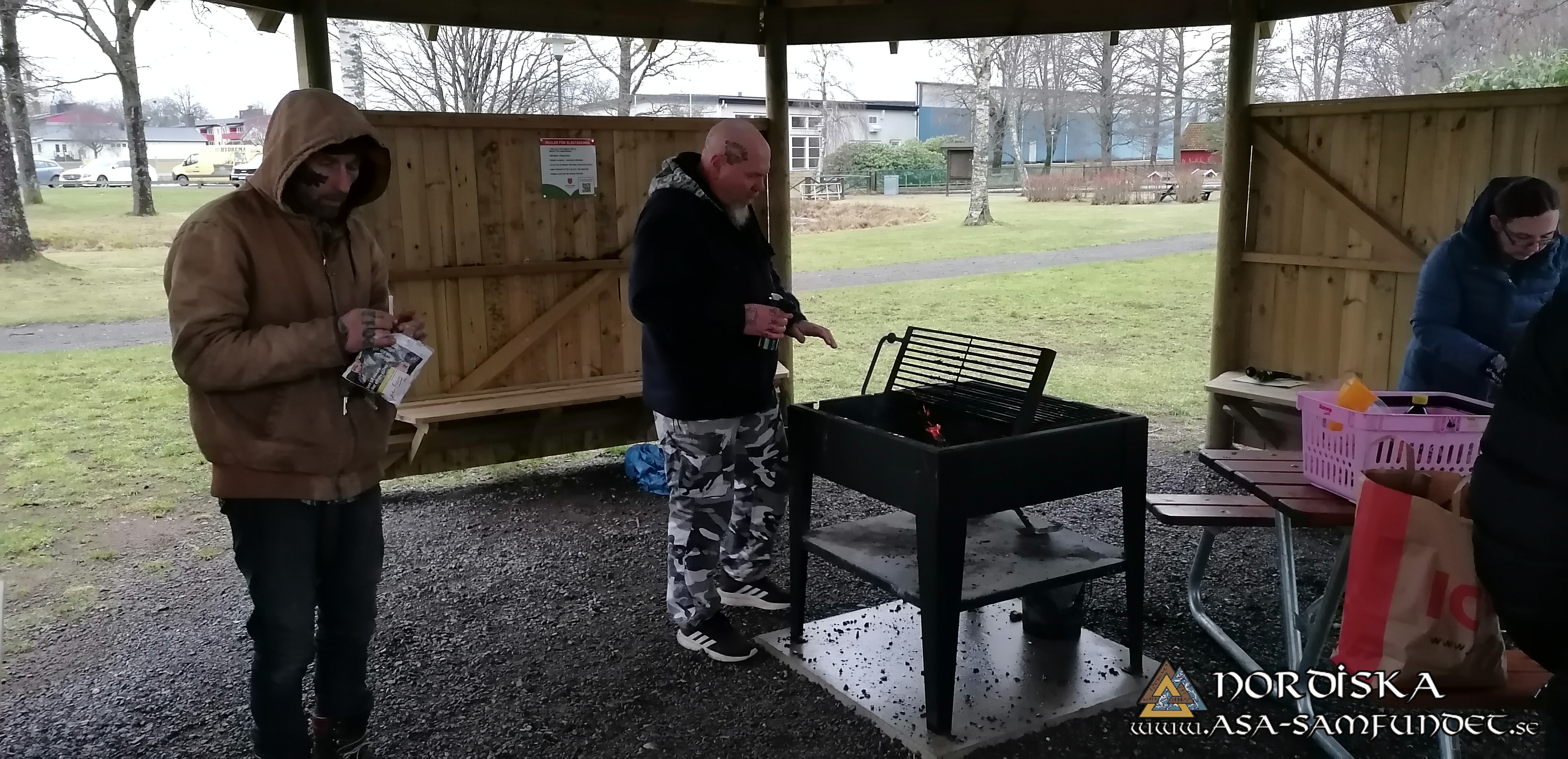
Once the initiation ritual was finished, everything was packed up, and the offerings were left at a suitable spot in the area, we went to a nearby lakeside location with a fire pit. It was a nice place, well-maintained, family-friendly, and even suitable for camping. The grill was lit, and one of the blót kindred members had brought wooden stumps to burn, which was very welcome since nearly everyone was frozen after spending hours in the cold and damp weather. We talked, grilled hotdogs and hamburgers, and of course, there was hot coffee and cookies for those who didn’t want to wait for the food.
Despite the weather, it was a pleasant gathering. The burning stumps and the fire pit provided warmth for those who needed it—I was definitely one of those who preferred standing by a heat source rather than in the cold wind.
I also want to remind everyone that on March 15, we will be holding a Disablót at Replösa Burial Ground, just outside Ljungby, Sweden together with the blót kindred Sleipner from Östergötland. More information will be coming soon, so keep an eye on the website and/or the NAS/NAC swedish Facebook page: https://www.facebook.com/asasamfundet/
Hail Freyr
Hail Jólnir
Hail Yggdrasil
Hail Nordic Asa-Community
/Frank Ottosson
Contact Information for Yggdrasil:
Email: [email protected]
More information on our website: https://asa-samfundet.se/en/blot-kindred-yggdrasil-smaland-sweden/
Our official Facebook page: https://www.facebook.com/blotlagetyggdrasil