The Nordic Asa-community Blót Calendar.
What kind of calendar is our based on?
The Nordic Asa-community’s holiday calendar follows the pre-Christian heathen lunisolar calendar which includes both lunar and solar cycles during the year unlike the Julian calendar and Gregorian calendar which are solar calendars. This kind of calendar was followed by most pre-Christians and can be traced back all the way to the Stone Age.
The heathen calendar contained 12 months with an extra leap month inserted every two or three years, the extra leap month inserted during the summer. The months lasted from new moon to the change between full moon and new moon, from new moon to new moon simply explained (referred to as new and below in the sources) which made the pre-Christian months start and end at different times than our months do today. The full moon was and is an important time for Asatru and for Germanic paganism, as well as many other pre-Christian religions. It was at the full moon in a specific lunar month that the blót was performed and not at any point in the season, e.g. vernal equinox. The modern “heathen” calendar where seasons, e.g. vernal equinox constitutes the timing of heathen holidays is not historically based, but it is built on loose 17th and 19th century theories as well as 20th century neo-heathenry with influences from other belief systems e.g. wicca and way of life.
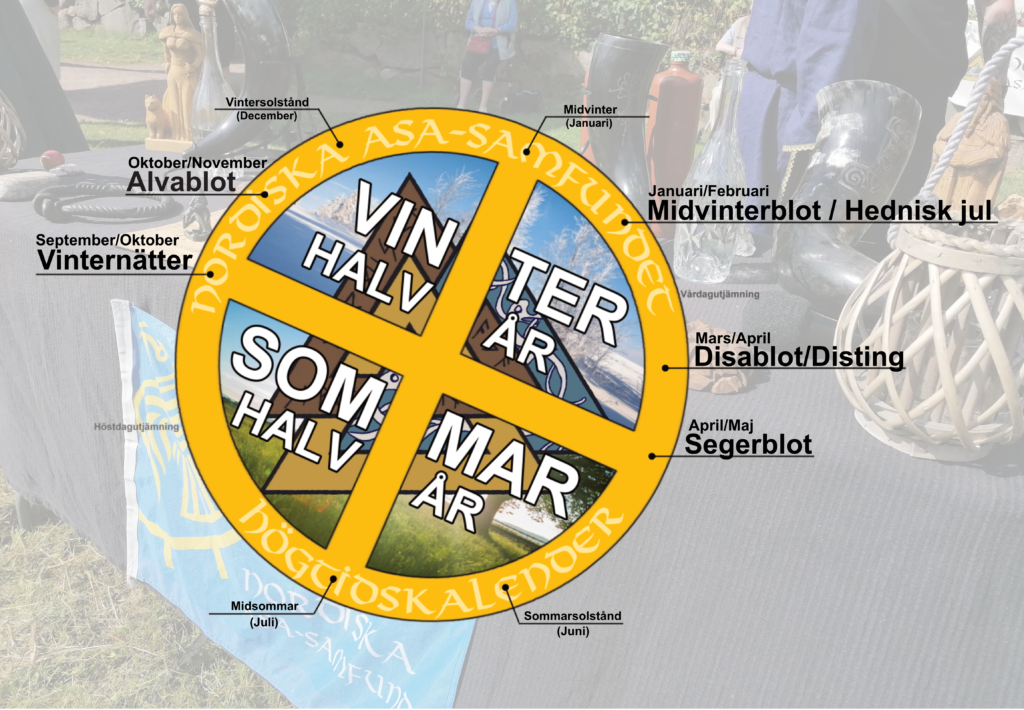
In pre-Christian times, the year was not divided into 4 different seasons as today ie. winter, spring, summer and autumn, but the year was divided into two half-years, Summer semi-year and Winter semi-year, each semi-year was divided into 2 quarters in total the year consisted of 4 quarters. The first quarter lasted from winter nights in September/October to midwinter in January/February, the second quarter lasted from midwinter to summermál in April, the third quarter lasted from summermál to midsummer in July, and the fourth quarter lasted from midsummer to winter nights in September/October.
The holidays (blót´s) that we perform are 5 in number distributed over 1 year, all of them are historically covered in the sources. In addition to these 5, we organize a large Summer Blót around the real midsummer time, which is in July, this blot is not historically based, but the blot that we in the community have created.
Because the holidays fall on a specific full moon, the holidays do not fall on the same date every year, the holidays are floating over a 19-year cycle. With that, there is only one fixed time of the year and that is the Winter Solstice and it is from the Winter Solstice that you start from together with the first new moon after the Winter Solstice to calculate when the holidays fall, the new moon is important because depending on whether it falls too close to the winter solstice or not, you can calculate whether an extra month (leap month) should be pushed into June/July. This calculation is called the Disting rule.
Counting the number of full moons means that the blót´s do not have fixed dates but differ from year to year.
To simplify things:
It’s easiest to start with the three major holidays, Midwinter Blót/Yule, Victory Blót and Winter Nights.
Midwinter Blót/heathen yule, January/February:
The easiest way to start is to first figure out when the Midwinter Blót/yule is.
The Midwinter Blót/yules always starts on the first full moon after the first new moon after the winter solstice, and lasts for three nights/days.
Sigurblót / Victory Blót, March/April/May:
For the next major festival which is the Victory Blót, there should be 3 full moons from the Midwinter Blót.
The Victory Blót begins on the evening of the full moon and lasts for three nights/days.
If you want to follow the disting-rule, the Victory Blót is the fourth full moon after the first new moon after the winter solstice.
Winter Nights, September/October/Nov
For the third holiday, which is Winter Nights, 3 full moons are counted before the midwinter blót.
Winter Nights starts on the evening of the full moon and lasts for three nights/days.
Once you have worked out the major holidays, you can work out the two minor blóts, the Disablót (Disting occurs every nine years) and the Álfablót.
Disablót (Sweden), February/March:
The Disablót falls on the first full moon before the Victory Blót and lasts for one day/night.
If you want to follow the disting-rule, the Disablót is the third full moon after the first new moon after the winter solstice.
The Disting occurs every nine years and lasts for nine days/nights.
Álfablót, October/November/December:
The Álfablót occurs at the first full moon after the Winter Nights and lasts for one day/night.
The Blót.
In Ynglinga Saga in chapter 8 (depending on the translation and version) Snorri Sturlusson writes that Odin lays down the law on 3 blóts in the land of Svitjod (Sweden) which they must fulfil.
The first blót is at the beginning of winter which is for good year, which is Winter Nights the second blót is at midwinter (do not confuse with winter solstice) which is for good harvest, which is Midwinter Blót/heathen yule and the third blót is at the beginning of summer, it is for victory and success, which is the Victory Blót.
In addition to these three blóts, there are 2 other blóts mentioned in the sources, one is Disablót/Disting and the other is Álafablót.
What is a blót?
Blót means sacrifice and was a way for our ancestors to appease the Gods so that they would give people good harvests and a good life. Depending on what they wanted, they were exposed to different gods. To Thor, for good weather on boat trips. To Odin, to share his wisdom, etc.
Here you can download a description on how to perform a blót in modern times (swedish text).
Here are the annual 5 blót´s that the Nordic Asa-community carries out according to what is found in the sources.
Blót Calendar 2026, the year of Freyja.
MIDWINTER BLÓT / YULE
February 1–3 2026
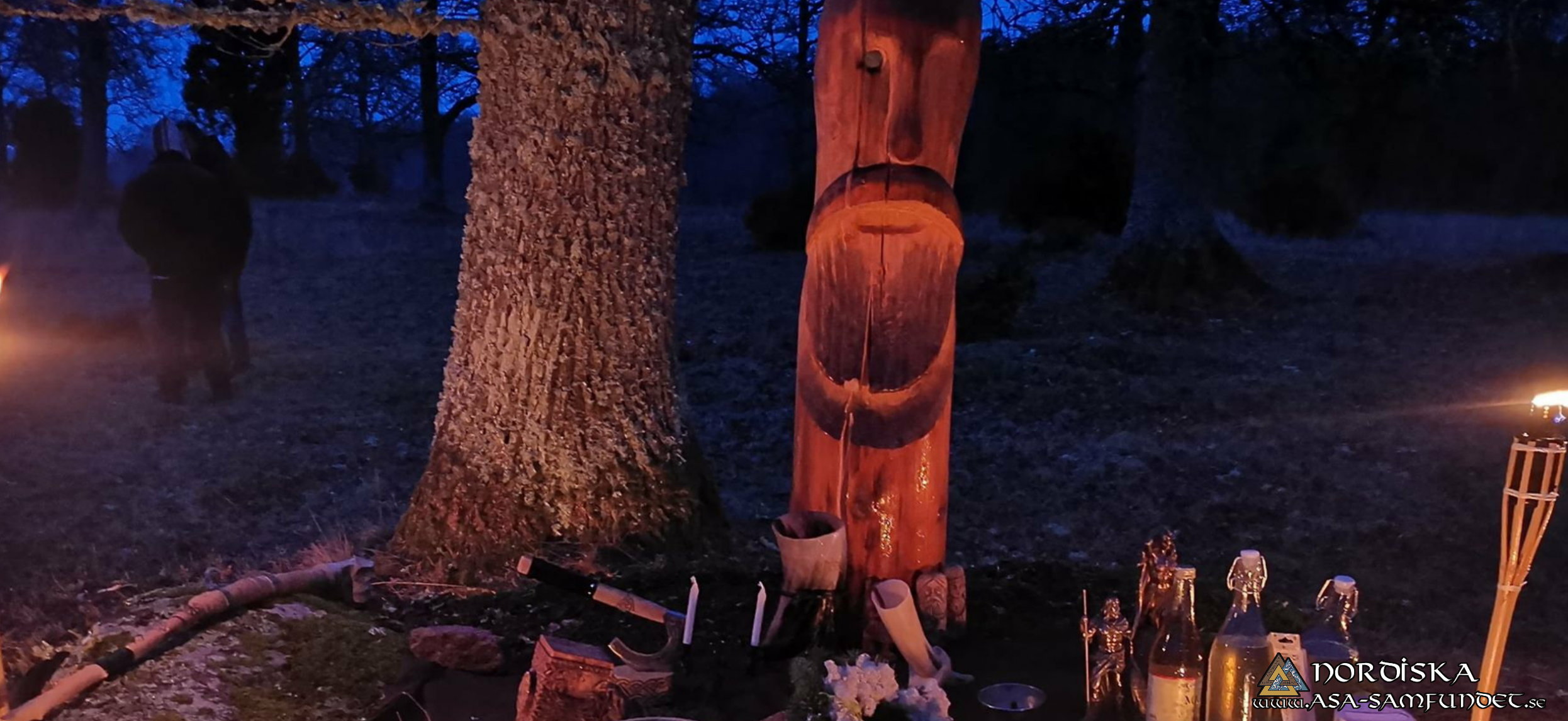
This blót is the second blót on which Odin lays down the law in the Ynglinga Saga, which is a blót at midwinter. According to the pre-Christian calendar, midwinter (miðjum vetri) was the middle of the winter season, which was in February (today 14 January according to the Gregorian calendar). Midwinter first became synonymous with the winter solstice as late as the 18th century. The sources say that hokunótt is in midwinter (January/February) and it was hokunótt that started the heathen yule. There are many disputes about whether and when this happened and what the origin was. But what is certain is that yule was
The Saga of Haakon the Good says that he moved yule from hokunótt (midwinter) to the Christian feast of the birth of jesus (which is 25 December) but here in the Nordics it ended up on 24 December. It also says that the yule was celebrated for three days.
The Midwinter Blót/yule was also not a festival to celebrate the new year (New Year), according to the lunisolar calendar which is supported by sources, the new year (New Year) begins in connection with the holiday of Winter Nights and the beginning of the winter season in September/October/November.
According to Odin, this is a sign of a good harvest to come, and it is a good thing to blót to Freyr to ensure good harvests in the coming year. Jólnir is described in sources as the god of yule, Jólnir is one of the many names of Odin. Blót for Jólnir may also be appropriate.
The sources describe toasting Odin, Freyr and the ancestors (the latter is called minniskál), but also giving each other gifts (which was a common occurrence at blots in general), swearing important oaths and making vows at the brush of a pig called sonargǫltr (sacrificial goat), which was later sacrificed to Freyr. Vows were also made when drinking the Bragifull (toast to Bragi).
No feast is complete without food: in addition to the meat of the sacrificed goat, horse or other meat, plenty of food was offered during the festivities. The sources mention that even invited guests brought cattle and other types of food to the yule festivities.
After the blót, a guild was held, which was probably part of the closing ceremony of the blót; at yule, this guild is referred to as jólveizla in the sources.
We know from the sources that there was a lot of drinking at yule (and other holidays), with large parties lasting several nights.
What is described as the oldest source of the word jól (the Old Norse word for yule) from the late 8th century mentions drinking yule.
‘Drinking yule’ is a term that has stuck with us into the 19th if not early 20th century to celebrate yule, but although there is a lot of drinking associated with yule celebrations, it may be that originally “drinking yule” was a euphemism for toasting the various powers as these were done during the very important drinking ritual called sumbl in the sources, this is when you perform the three toasts to Odin, Freyr and the minniskál (for those not with us today), this ritual was performed during the jólveizlan (yule guild).
It can be summed up that, this holiday is about being with family, kin, blót to the deity of fertility, the deity of yule, remembering those who are not with us in life, making promises to each other, eating well and giving each other presents.
The Midwinter Blót/Heathen yule falls on the first full moon after the first new moon after the winter solstice and lasts for three nights.
See the Events section for the dates of the Midwinter Blót organised by our Blót Kindreds.
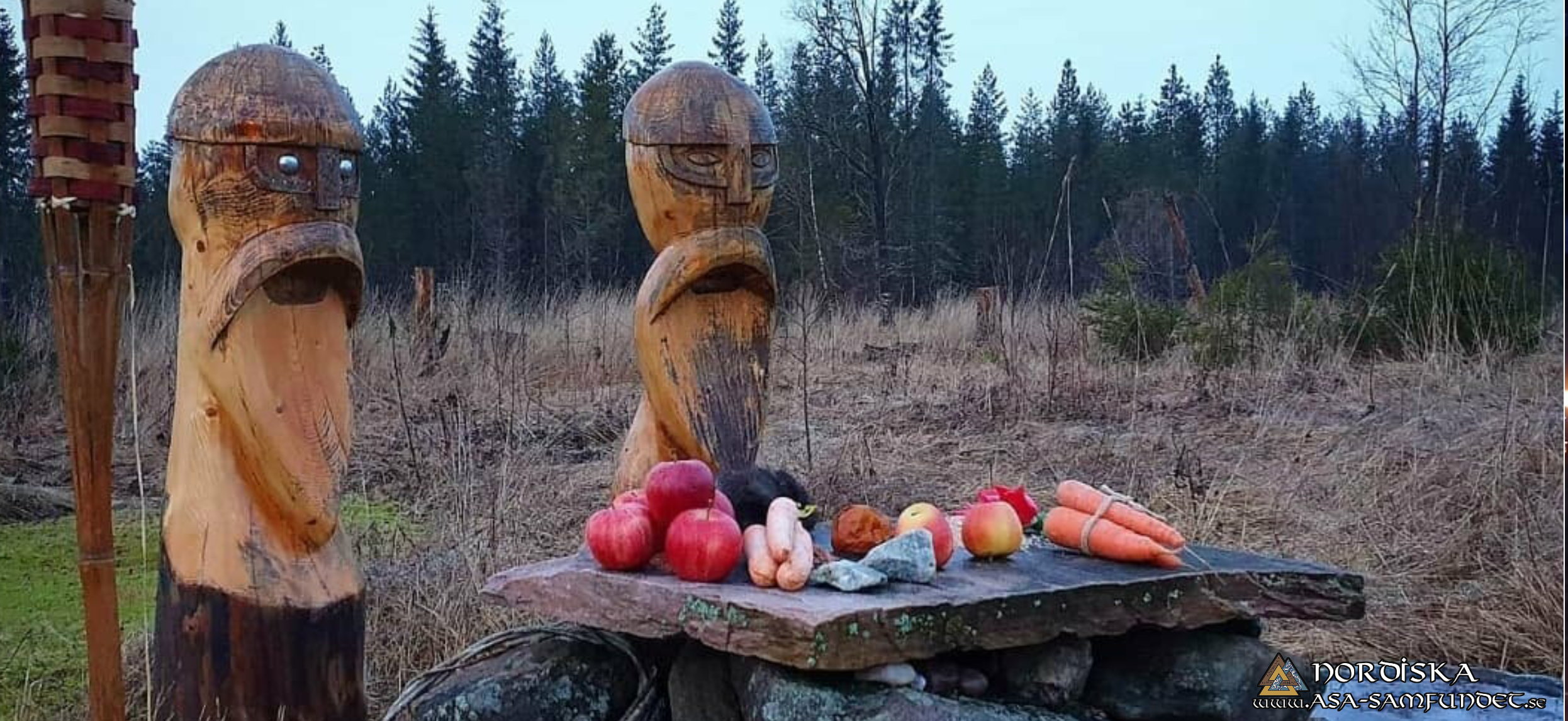
DISABLÓT
April 2 2026
The Disablót is one of the most famous blót´s, and like the Midvinter blót/yule one of the most misunderstood blót´s. The Disablót did not take place at the beginning of February, but at the third month called Göja/Göje (today between around the end of February and mid-March). It was when the Swedes were Christianized that the Disting/Disablót was moved to the Christian holiday of the Candle Mass, which is at the beginning of February (today on February 2) and even today Disting market is organized.
Disting/Disablót is mentioned by Adam of Bremen, according to him, this simply takes place in Old Uppsala in the month of Göje after the vernal equinox and all inhabitants of Svitjod (Sweden) had to participate, if they did not want to participate they had to pay a fine.
The disablót is deeply rooted in the veneration of the Disir´s – a group of powerful female forces closely associated with destiny, fertility, protection, and the general well-being of the family and community. The Disir´s are central figures in the Asatru, they are linked to the Nornirs who determine our destinies but also to the fylgior´s, thus the Disir´s are revered in part as ancestral guardians who exert a profound influence over our lives. They watch over their kin, guarantee prosperity, offer protection and guidance through both everyday and spiritual challenges. But the disir´s are also associated with the Valkyries and the Vanadis Freya.
The Disablót falls on the first full moon before the Victory Blót and lasts for one day/night.
If you want to use the disting-rule, the Disablót is the third full moon after the first new moon after the winter solstice.
The disting occurs every nine years with the same calculation.
Every nine years the Disting was held. The event lasted for 9 nights, a market was organised, horse races, parties and, of course, the usual blót, etc. The market survived Christianisation and is still organised today, but around a Christian holiday.
In the Icelandic sources it is mentioned that the Disablót was performed in connection with the holiday of Winter Nights, this is probably the Icelanders’ and Norwegians’ time for the Disablót while the Swedes held it in the spring.
See the Events section for the dates of the Disablót organised by our Blót Kindreds.
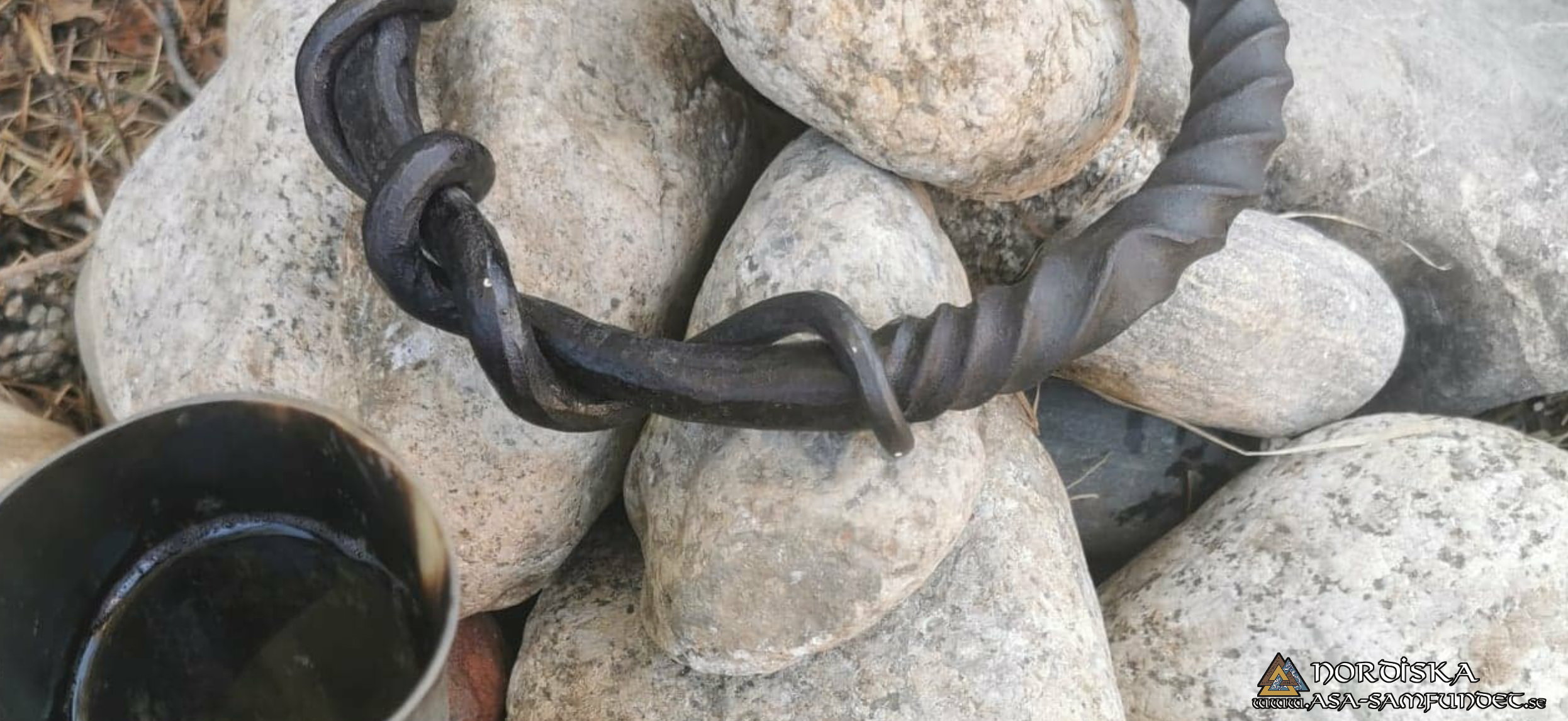
VICTORY BLÓT / SIGURBLÓT
May 1-3 2026
The Sigurblót (Victory Blót) is the 3rd blót that Odin makes law in Svitjod, and takes place at the beginning of summer. Also this blót is disputed about when it should have taken place, some claim that it is at the spring equinox others at Walpurgis Night. But it is clear that the blót should take place at the beginning of summer (today, according to the Gregorian calendar, April 14).
The Victory Blót, celebrated at the beginning of summer sometime in March/April/May, is an important holiday that celebrates the pursuit of victory and success. The term ‘blót’ refers to the sacrificial rituals that are central to the practice of religion, and ‘victory’, emphasises the primary focus of the holiday: seeking divine blessings to triumph in the many challenges that would come during the summer season.
In our modern age, however, our battles do not always look the same as they did 1000 years ago and we now fight the battles we have to fight and wish to win. We consecrate and make offerings to the powers that be during this ceremony to give us the tools such as knowledge, will and power to win our personal battles.
The Victory Blót is not only a sign of future victories and successes, but it also marks the end of the winter season and the beginning of the summer season.
The Victory Blót occurs on the third full moon after the Midwinter Blót and lasts for three days from the full moon.
If you want to use the disting-rule, the Victory Blót is the fourth full moon after the first new moon after the winter solstice.
See the Events section for the dates of the Victory Blóts organised by our Blót Kindreds.
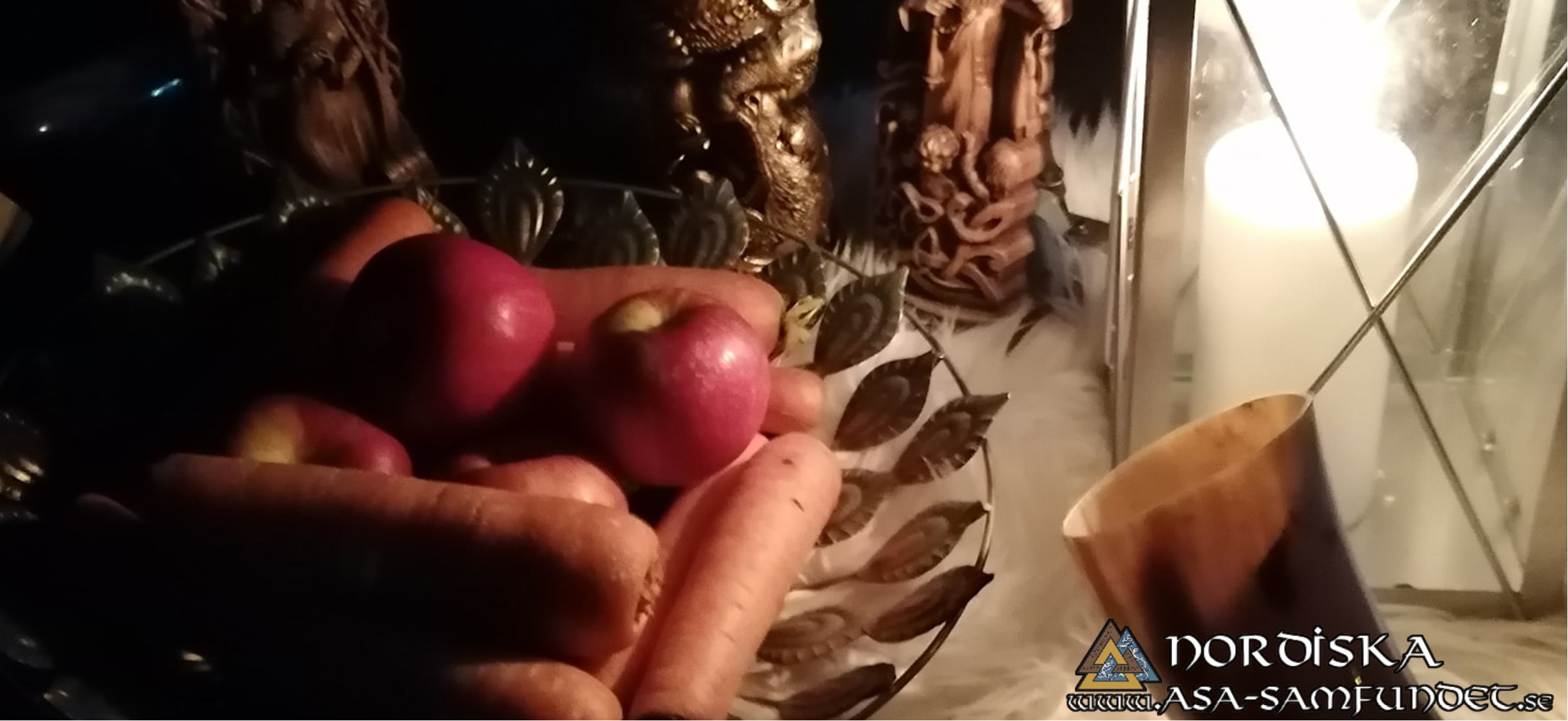
WINTER NIGHTS
Oktober 26-28 2026
In Ynglinga, Winter Nights is mentioned as the first blót of Odin, a blót dedicated to a good coming year. Which can be interpreted as the beginning of a new year.
The Winter Nights are at the first day of winter and the starting point of the winter semi-year, in our modern Gregorian calendar the first day of winter is October 14, but in the heathen lunisolar calendar the festival falls at the full moon in the month Haustmánuður which means harvest month which today falls around September/October, (the word haust, autumn in English is an old norse name for harvest/salvaging).
Winter Nights is an important holiday marking the transition from summer to winter, usually celebrated sometime in September/October, but in the case of an extra lunar month, Winter Nights was moved to November.
Winter Nights has a deep cultural and spiritual significance, as it centred on people’s gratitude for the year’s harvest. The holiday also signifies the culmination of the year’s agricultural work and marked the last harvest, it is a time to celebrate the generosity of the land and recognise the collective work and cooperation that had led to the harvest being gathered. This achievement is celebrated with a deep sense of gratitude, which recognised both the richness of the land and the human effort that secured it.
Winter nights are not only a celebration of the harvest but also a celebration of the year ahead, marking the beginning of the new year.
They blót for a good upcoming year and for peace, ‘til árs ok friðar’ as it is called in Old Norse.
Winter nights occur on the third full moon before the Midwinter Blót and last for three nights/days from the full moon.
The Icelandic sources also mention Disablót in connection with Winter Nights, which is probably the time of the Icelanders‘ and Norwegians’ Disablót, while the Swedes held it in the spring. The term ‘haustblót’ is also used in connection with Winter Nights, which confirms that this festival was also a way of celebrating the harvest.
See the Events section for the dates of the Victory Blóts organised by our Blót Kindreds.

ÀLFABLÓT
November 24 2026
The Álfablót is one of the two blót´s mentioned in the Icelandic sources, there are mainly two sources about Álfablót, Austrfararvisur and the Saga of Olaf the Saint, both sagas are based on each other. The Álfablót is considered a blót on the ancestor worship that runs like a red thread through our faith.
The Álfablót is a holiday dedicated to the veneration of the elves, in Asatru elves are mystical and powerful figures, often linked to deceased ancestors and foremothers, fertility and nature. They are considered to be powerful and sometimes unpredictable beings who could influence the health, wealth and well-being of the living. The Álfablót is an important occasion to honour them, seek their favour and ensure a harmonious relationship between the worlds of humans and them. Elves are central figures in Asatru and are associated with both the land and the ancestors. The concept of Elves is linked to our ancestors, foremothers, family members, relatives, kinsmen and kinswomen who are not with us today. In other contexts, they are perceived as natural beings, closely linked to specific places such as groves, hills or burial mounds. This dual connection to both nature and ancestors emphasises the important role of the elves in maintaining the balance between the human and the spiritual in Asatru.
The Álfablót is also the blót that takes place behind closed doors, it is a private celebration for the family and means that outsiders are not welcome. It was considered highly inappropriate, and even taboo, for strangers to attend this blót, as the relationship between the family and the ancestors is deeply personal and sacred. Keeping the blót within the household ensures that our relationship with the ancestors remains pure, undisturbed and properly honoured. Elves are seen as the protectors and guardians of the family, but their favour is not something that can be taken for granted. Making offerings not only acknowledges the constant protection of the elves but also expresses their deep gratitude for the blessings they had received during the year. In this reciprocal relationship, the offerings served both as a thank you and as an appeal for the Elves’ continued support, especially as they prepare to face the harsh and uncertain challenges of the coming winter months. This exchange underlines the interdependence of the human and ancestral worlds and reinforces the idea that family well-being and ancestral favour were intertwined and mutually supportive in a delicate balance.
The Álfablót falls on the first full moon after the Winter Nights.
See the Events section for the dates of the Álfablót organised by our Blót Kindreds.
Here are blót´s or other days that are noticed by NAS/NAC that are not historically covered in sources.
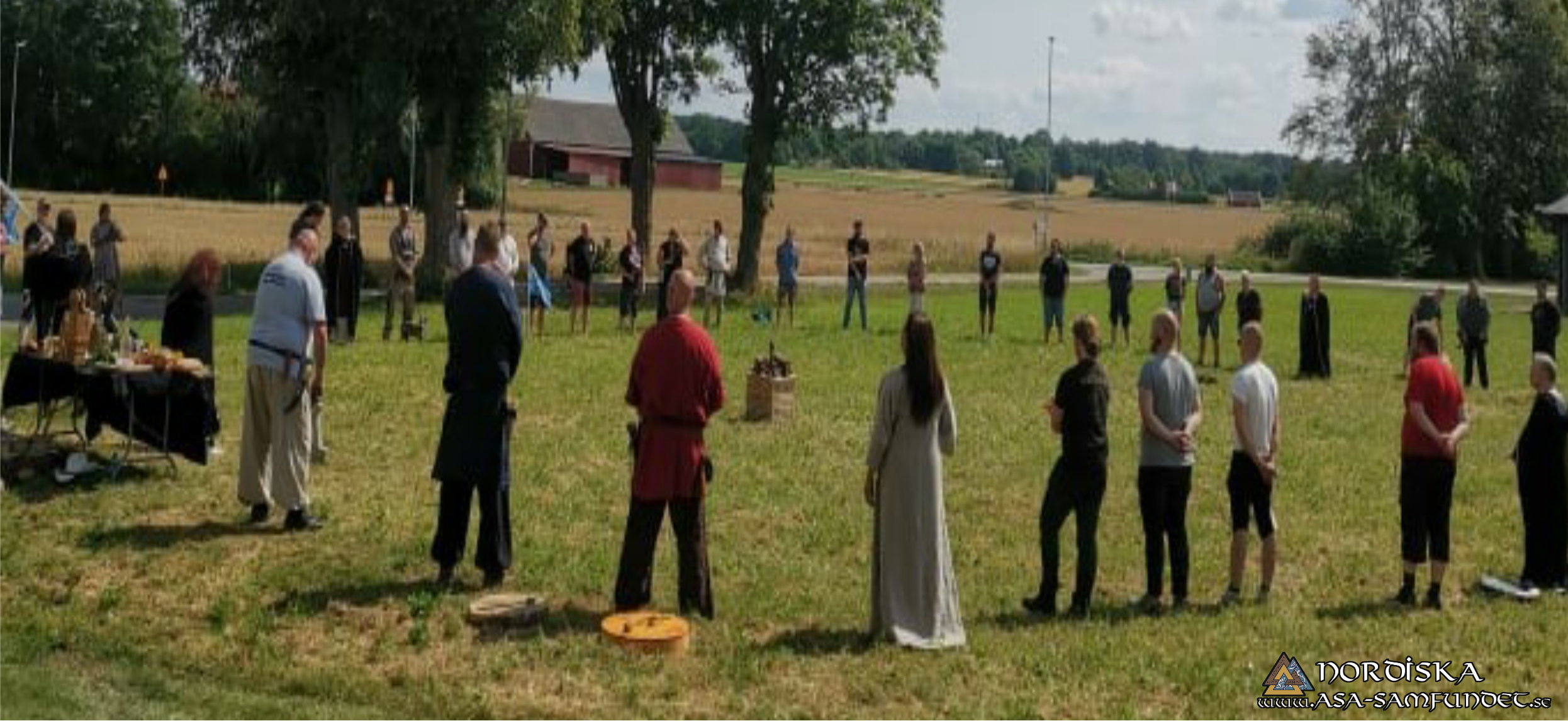
NAS/NAC SUMMER BLÓT
July 25 2026
This blót is not found in the sources, but it is believed that a mid-summer blót should have existed but there are no sources for it.
This is the community’s own annual blót which takes place around the full moon in July.
The summer blot is organized at Rök Runestone in Ödeshög, Sweden.
More information about the Summer Blót will be available soon.
THE ASATRU DAY
September 9
This day was created by the community to celebrate the Asatru itself.
9/9 (September 9) every year is the holy day. Nine days Odin hung himself, for himself, in Yggdrasil, Nine worlds are in the universe.
The Asatru Day is a day for reflection and a day to honor with good food and drink together with family and/or loved ones. A day that we should give an extra thought to those around us in our everyday lives and those who have given us everything we have to enjoy. Young and old.
We also take the opportunity to blót together and show the powers that be that we honor them and show our appreciation. A blót where we do not ask for anything in return but a blót of respect.
Every nine years, the community organises a big blót in Gamla Uppsala, (Old Uppsala), Sweden in connection with the Asatru Day.