Yggdrasil (Yggdrasill) – Mimameid – Laerad.
Yggdrasil (Old Norse Yggdrasill) is the mighty tree whose trunk rises in the geographical center of the Norse spiritual cosmos. The rest of that cosmos, including the nine worlds, is arranged around it and held together by its branches and roots, which connect the different parts of the cosmos with each other. Because of this, the well-being of the cosmos depends on the well-being of Yggdrasil. When the tree trembles, it signals the arrival of Ragnarok, the destruction of the universe.

The first word in the name Yggdrasil, Yggr means the terrifying, the terrible in Old Norse, which is one of the countless names of Odin, the second word, drasill, means horse seems to be formed from the dra(ga) suffix -sel, as in birth. The name Yggdrasil means “Odin’s horse”, which can be linked to when Odin sacrificed himself to himself in Yggdrasil:
Yggr (the frightening/fearsome one) hung in the tree whose drasill (horse) carried Odin’s body – Ygg (the frightening, fearsome one’s) drasill (horse). The horse of the terrifying/fearsome one.
Havamal
138
I know that I hung
on a windy tree
nine long nights,
wounded with a spear,
dedicated to Odin,
myself to myself,
on that tree of which no man knows
from where its roots run.
139.
No bread did they give me
nor a drink from a horn,
downwards I peered;
I took up the runes,
screaming I took them,
then I fell back from there.
Havamál
138
Veit ek, at ek hekk
vindga meiði á
nætr allar níu,
geiri undaðr
ok gefinn Óðni,
sjalfr sjalfum mér,
á þeim meiði,
er manngi veit
hvers af rótum renn.
139.
Við hleifi mik sældu
né við hornigi;
nýsta ek niðr,
nam ek upp rúnar,
æpandi nam,
fell ek aftr þaðan.
In the sources, Yggdrasil is referred to by other names, in the Song of Fjolsvinn (Old West Norse: Fjölsvinnsmál/Fjǫlsvinnsmál) verses 19-24, Vindkald (Old West Norse: Vindkaldr) asks Fjolsvinn (Old West Norse: Fjǫlsvinn/Fjölsvinn) what the conifer whose branches stretch across all the worlds is called, Fjollsvinn answers that the tree is called Mimameid (Old West Norse: Mímameiðr ) whose roots are not known where they lead, the tree cannot be destroyed by either iron or fire, the tree’s fruit is wolfberries/nuts used as medicine by humans, and at the top sits Vindovner (Old West Norse: Víðópnir ) which shines like gold.
English Translation:
Vindkald said:
19.
“Now tell me, Fjolsvith,
what I will ask you
and what I wish to know:
what is the name of the tree,
whose branches extend
through all the lands?”
Fjolsvinn said:
20.
‘Mimameid is it’s name,
and few are they who know
from what roots it grows;
by what it will fall,
no one knows;
neither fire nor iron can fell it.”
Windkald said:
21.
‘Now tell me, Fjolsvinn,
what I will ask you
and what I wish to know:
what becomes of the fruit
of this renowned tree,
felled by neither fire nor iron?”
Fjolsvinn said:
22.
“Its fruit is taken
and laid upon a fire
for women in labour;
out then will come
that which they carry inside;
thus it metes out fate among men.”
Vindkald said:
23.
“Now tell me, Fjolsvinn,
what I will ask you
and what I wish to know:
what is the name of the cock
who sits in the lofty tree,
all aglow with gold?”
Fjolsvinn said:
24.
“His name is Vidofnir,
and he stands upon Vedurglasir,
the boughs of Mími’s tree;
with a single sorrow
he, the immense, is afflicted
by Sinmara’s Surt.”
Old West Norse version:
Vindkaldr kvað:
19.
“Segðu mér þat, Fjölsviðr,
er ek þik fregna mun
ok ek vilja vita:
Hvat þat barr heitir,
er breiðask um
lönd öll limar?”
Fjölsviðr kvað:
20.
“Mímameiðr hann heitir,
en þat manngi veit,
af hverjum rótum renn;
við þat hann fellr,
er fæstan varir,
flær-at hann eld né járn.”
Vindkaldr kvað:
21.
“Segðu mér þat, Fjölsviðr,
er ek þik fregna mun
ok ek vilja vita:
Hvat af móði verðr
þess ins mæra viðar,
er hann flær-rat eld né járn?”
Fjölsviðr kvað:
22.
“Út af hans aldni
skal á eld bera
fyr kelisjúkar konur;
útar hverfa
þats þær innar skyli,
sá er hann með mönnum mjötuðr.”
Vindkaldr kvað:
23.
“Segðu mér þat, Fjölsviðr,
er ek þik fregna mun
ok ek vilja vita:
Hvat sá hani heitir,
er sitr í inum háva viði,
allr hann við gull glóir?”
Fjölsviðr kvað:
24.
“Víðópnir hann heitir,
en hann stendr veðrglasir
á meiðs kvistum Míma;
einum ekka
þryngr hann örófsaman
Surtr Sinmöru.”
The name Mimameid (Old West Norse: Mímameiðr) first part Mima means Mimer (Old West Norse: Mimír) and second part meiðr means tree. Mimameid then refers to Mimer’s tree, which may refer to the fact that Mimer’s well is located at one of the three roots.
In the Lay of Grimnir (Old West Norse: Grimnismál) and Gylfaginning (Old West Norse: Hér hefr Gylfaginning), Yggdrasil is referred to as Laerad (Old West Norse: Læraðr/Léraðr). In the Song of Grimnir it is said that the goat Heidrun (Old Norse: Heiðrún ) and the deer Eiktyrner (Old Norse: Eikþyrnir ) stand on the branches of Laerad and gnaw on its branches.
English Translation:
25.
Heidrun the goat is called,
that stands o’er Odin’s hall,
and bits from Laerad’s branches.
He a bowl shall fill
with the bright mead;
that drink shall never fail.
26.
Eikthyrnir the hart is called,
that stands o’er Odin’s hall,
and bits from Laerad’s branches;
from his horns fall
drops into Hvergelmir,
whence all waters rise:-
Old West Norse version:
25.
Heiðrún heitir geit,
er stendr höllu á
ok bítr af Læraðs limum;
skapker fylla
hon skal ins skíra mjaðar;
kná-at sú veig vanask.
26.
Eikþyrnir heitir hjörtr,
er stendr höllu á
ok bítr af Læraðs limum;
en af hans hornum
drýpr í Hvergelmi,
þaðan eigu vötn öll vega.
Gylfaginning (Old West Norse Hér hefr Gylfaginning):
English Translation:
A she-goat, by name Heidrun, stands up in Valhal and bites the leaves off the branches of that famous tree called Laerad. From her teats runs so much mead that she fills every day a vessel in the hall from which the horns are filled, and which is so large that all the einherjes get all the drink they want out of it. Then said Ganglere: That is a most useful goat, and a right excellent tree that must be that she feeds upon. Then said Har: Still more remarkable is the hart Eikthyrner, which stands over Valhal and bites the branches of the same tree. From his horns fall so many drops down into Hvergelmer, that thence flow the rivers that are called Sid, Vid, Sekin, Ekin, Svol, Gunthro, Fjorm, Fimbulthul, Gipul, Gopul, Gomul and Geirvimul, all of which fall about the abodes of the asas. The following are also named: Thyn, Vin, Thol, Bol, Grad, Gunthrain, Nyt, Not, Non, Hron, Vina, Vegsvin, Thjodnuma.
Old West Norse version:
Geit sú, er Heiðrún heitir, stendr uppi á Valhöll ok bítr barr af limum trés þess, er mjök er nafnfrægt, er Læraðr heitir, en ór spenum hennar rennr mjöðr sá, er hon fyllir skapker hvern dag. Þat er svá mikit, at allir Einherjar verða fulldrukknir af. Þá mælti Gangleri: “Þat er þeim geysihaglig geit. Forkunnargóðr viðr mun þat vera, er hon bítr af.” Þá mælti Hárr: “Enn er meira mark at of hjörtinn Eikþyrni, er stendr á Valhöll ok bítr af limum þess trés, en af hornum hans verðr svá mikill dropi, at niðr kemr í Hvergelmi, ok þaðan af falla þær ár, er svá heita: Síð, Víð, Sækin, Ekin, Svöl, Gunnþró, Fjörm, Fimbulþul, Gípul, Göpul, Gömul, Geirvimul. Þessar falla um ása byggðir. Þessar eru enn nefndar: Þyn, Vín, Þöll, Höll, Gráð, Gunnþráin, Nyt, Nöt, Nönn, Hrönn, Vína, Vegsvinn, Þjóðnuma.
The name Laerad (Old West Norse Læraðr/Léraðr) is difficult to interpret if the first part is Læ- which means betrayed or damaged, it can be linked to Odin’s self-sacrifice, but if the first syllable is instead (H)lé- which means shelter/protection, the name can be read as Hléráðr, ‘the one who prevails for shelter’, that is, through his branches protects from the wind.
Yggdrasil is usually referred to as an ash but on other occasions it is said that no one knows what species the magnificent tree belongs to while in sources such as Fjölsvinnsmál it is mentioned that the tree is a conifer, which stands green all year round, which makes Yggdrasil believed not to be an ash but a yew.
The Old Norwegian and Old English rune poems say this about the Ýr-rune, which means yew:
Old Norwegian:
Ýr er vetrgrønstr viða;
vænt er, er brennr, at sviða.
The yew (Ýr rune) is the greenest of trees in winter;
it usually cracks when it burns.
Old English
Eoh byþ utan unsmeþe treow,heard hrusan fæst, hyrde fyres,
wyrtrumun underwreþyd, wyn on eþle.
The yew (=eoh rune) is a tree with rough bark,
hard and fast in the soil, supported by its roots,
a keeper of flames and a joy in a yard.
But in Gylfaginning, Snorri mentions that Yggdrasil sheds dew, which is called honeydew and provides food for bees, which a yew does not. In contrast, the linden tree does. Linden also forms large crowns of leaves during the summer. The Song of Fjollsvinn also mentions that Yggdrasil produces fruit in the form of acorns/nuts, which neither ash, yew nor lind trees do, which means that Yggdrasil can be an oak, like the Germanic world tree Irminsul.
Whether Yggdrasil is an ash, yew, linden or oak is uncertain, the sources contain too many contradictions about Yggdrasil that make it uncertain to be able to state with 100% certainty the species of the World Tree. However, most scientists and many in the heathen sphere agree that it is a yew tree, although the World Tree is generally considered to be an ash.
Many animals are said to live among the sturdy branches and roots of Yggdrasil. Around its roots lurk Nidhogg/Jörmungandr (Old West Norse Níðhǫggr/Jǫrmungandr) and several snakes, which gnaw at its roots. An unnamed eagle recently identified as Raesvelg (Old West Norse Hræsvelgr) sits on top, and a squirrel, Ratatoskr (Old West Norse Ratatǫskr ), runs up and down the trunk, conveying Nidhoggs/Jörmungandr (Old West Norse Níðhǫggr/Jǫrmungandr) insults to the eagle and vice versa. Meanwhile, four deer – Dain, Dvalin, Duneyr and Duratror, (Old West Norse Dáinn, Dvalinn, Duneyrr, Duraþrór) graze on the leaves of the tree


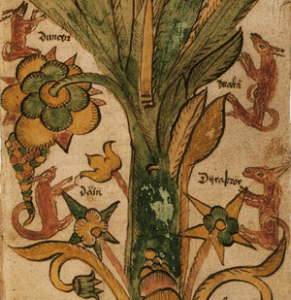

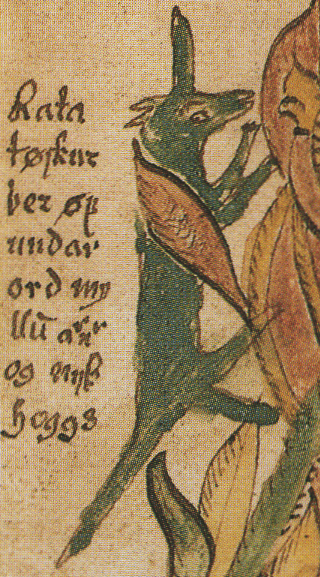

While some of these animals and their activities may be entertaining, they have a deeper meaning: the image of the tree being eaten little by little by several animals makes Yggrasil more and more vulnerable.
The Norse sources give vivid but contradictory accounts of the number and arrangement of roots and wells beneath the base of Yggdrasil’s trunk.
According to the poem The Lay of Grimnir (Grímnismál), Yggdrasil has three main roots: one leading to Midgard, the world of human; one to Jotunheim, the world of giants; and one to Hel, the underworld. While Völuspá mentions only one well under the tree: Urd’s well (Urðarbrunnr, ‘Well of Fate’).
Snorri Sturluson, however, in his Prosaic Edda, says that there are actually three wells under the tree, one for each of its roots. Urd’s well, according to him, is not under Yggdrasil, as it is in Völuspá – it is actually in the sky, and the root that grows out of it bends upwards towards the sky. Urd’s well is where the gods hold their daily council meetings. The second well is called Vergelmir (Old West Norse: Hvergelmir) which probably means ‘Roaring Cauldron’ and it is the body of water under the second root, which extends into Niflheim, this is the root that Nidhogg chews on. The third well is that of the wise Mimir, and it and its root are in the realm of the giants.
Here, as elsewhere, Snorri probably introduces an artificial systematisation of his own invention which did not exist in pre-christian times. But some of the elements he includes may have been taken from legitimate sources now lost to us. For example, Yggdrasil was sometimes called Mímameid as mentioned above.
But what about the nine worlds themselves? How are they organised around Yggdrasil?
The Old Norse sources do not tell us this – and for that matter they do not tell us which worlds make up the nine in the first place. Given the lack of systematisation or codification that characterises the entire Norse cosmos and religion, and the tolerance for fluidity, ambiguity and even contradiction that this implies, it is doubtful that there ever was a ‘map’ or diagrammatic picture of the nine worlds and their arrangements that all heathen Norse believed in. Any images you find online are speculative at best and impossible to verify.
Examples of alternative ‘maps’ of Yggdrasil and the nine worlds, although these are impossible to verify with facts.


Nevertheless, there are some clues in the sources that may allow us to construct a tentative and partial scheme of where some of the nine worlds would generally have been thought to be located. They seem to have been arranged along two axes, one vertical, the other horizontal. The vertical axis would correspond to the trunk of Yggdrasil, with Asgard in the highest branches, Midgard on the ground at the base of the tree, and Hel underground among the roots of the tree. The horizontal axis would be based on the distinction the Norse made between inside and outside farms. Thus Asgard would be just above the trunk of the tree, Midgard around the trunk (and therefore in the ‘centre’ of both these axes), and Jotunheim would surround Midgard and thus be that much more distant from the trunk. As for the other worlds: who knows?
We can at least see how important to the Norse worldview Yggdrasil was perceived to be by the number of earthly trees that the Norse treated as representations of the great world tree.
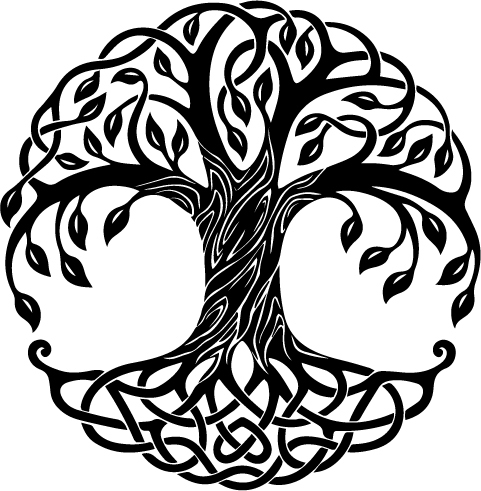
There are also many theories about the appearance of Yggdrasil, the most common is probably the shape of a tree with a large crown and roots forming a circle (See top image: Modern image of Yggdrasil) but there are older images that are believed to be Yggdrasil:
The Ockelbo rune stone, Sweden signum: Gs 19.
Dated to 1066 AD – 1099.
The Ockelbo stone is a rune stone as well as a picture stone. The images on the stone depict scenes from the Sigurd saga.
Inscription:
[blesa × lit × raisa × stain×kumbl × þesa × fa(i)(k)(r)(n) × ef(t)ir × sun sin × suar×aufþa × fr(i)þelfr × u-r × muþir × ons × siionum × kan : inuart : þisa × bhum : arn : (i)omuan sun : (m)(i)e(k)]
In modern English:
Bläsa had these beautiful stone raised after his son Svarthovde. Fridaelv was his mother …
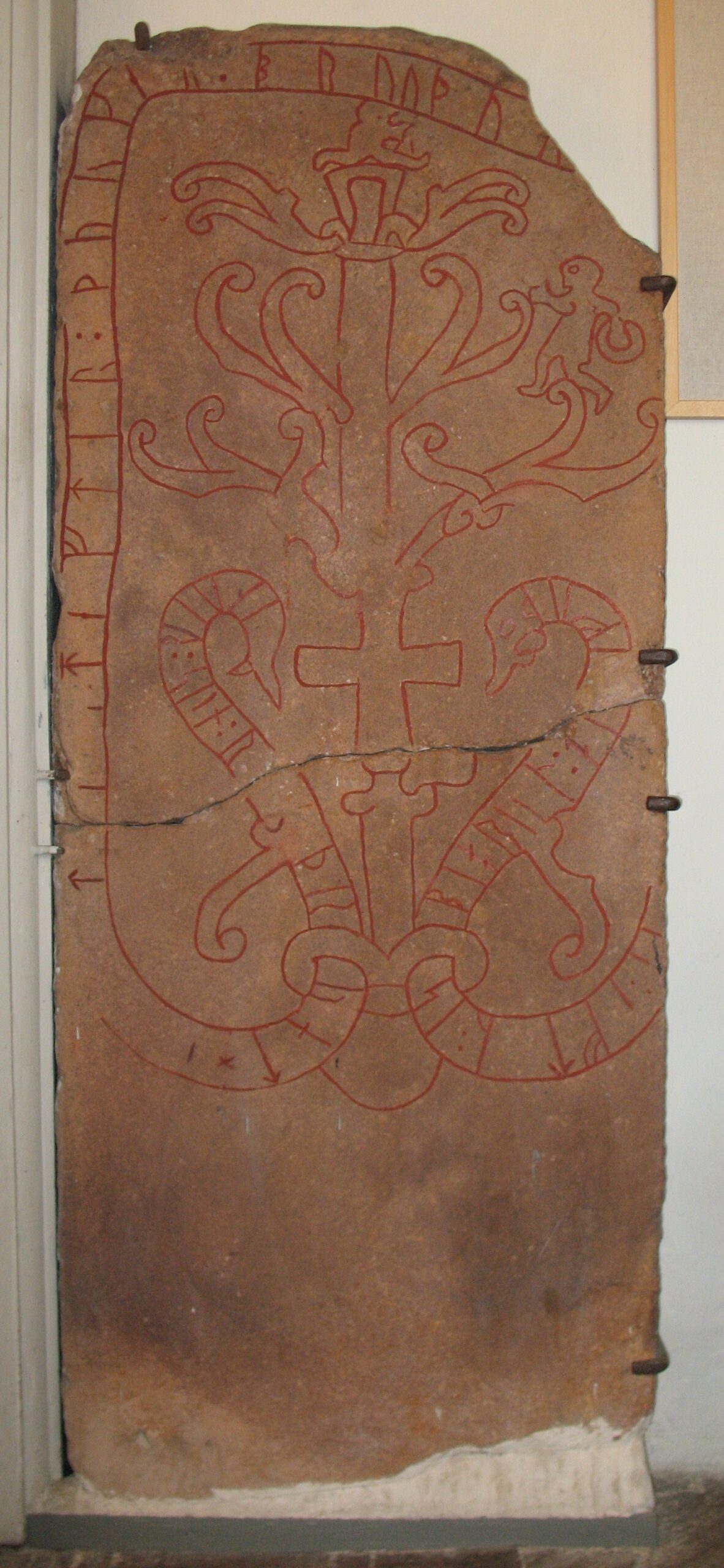
The Årsunda stone, signum Gs 9.
Dated to between 1020-1050.
Årsunda Stone, is a rune stone as well as a picture stone, The image on the stone consists of rich ornamentation with crosses, Yggdrasil and figures that go in the Ringerike style The stone is considered to belong to Sigurd carvings
Inscription:
(i)nu-r : sun : r[u]þ[u](r) at × [uili](t)… …[Ris:]t eftir : þurker : bruþu[r : sin : ok : kyþe=lfi : muþur : sina : uk] : eft[i]R : [a]sbiorn : o[k : o]ifuþ
In modern English:
Aunund (?), Rodas (?) son … (had the stone raised) after Torger, his brother and Gudaelv, his mother and after Åsbjörn and oifuþ.
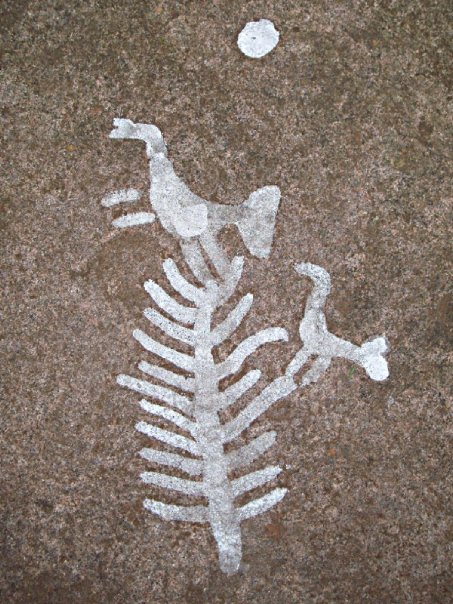
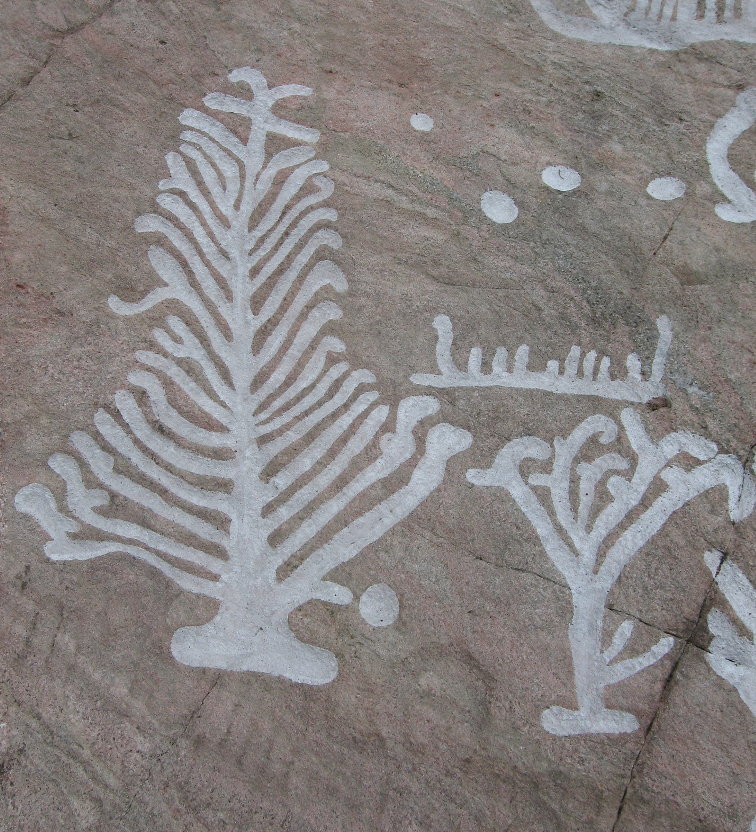
In addition to picture stones, there are petroglyphs representing trees, but whether these have any connection to Yggdrasil is very uncertain.
That said, there are similarities with some descriptions of Yggdrasil in the sources.


One of the best-known older depictions of Yggdrasil is the Jämtland Överhogdalsbonad, which dates to the late 11th or 12th century.

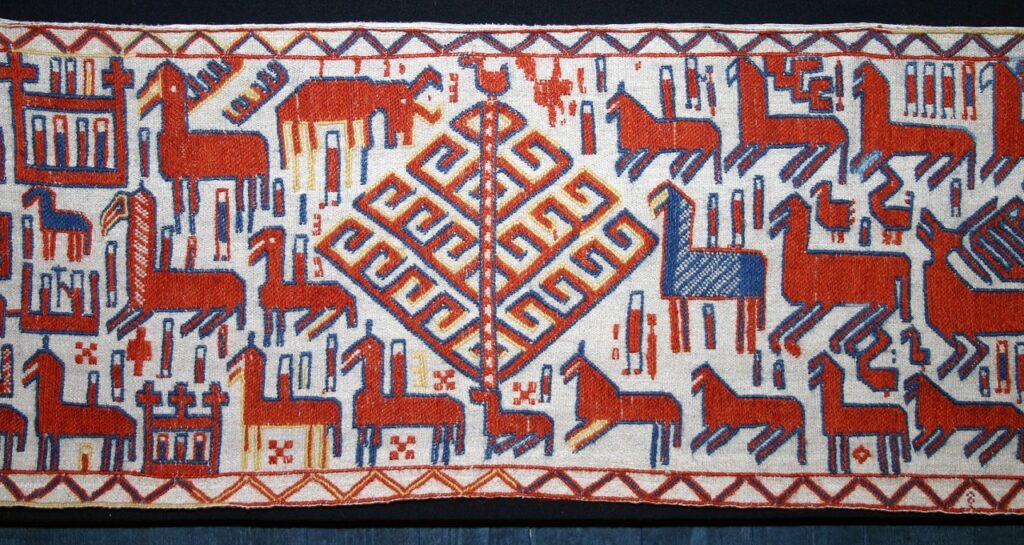

In the centre of the bonad is Yggdrasil together with two roosters, one on top and one at its root. The one on top is thought to represent Gullinkambi (Old West Norse Viðofnir), or perhaps the rooster Fjalar? The rooster at the root may represent the sooty red rooster of Hel.
Sources:
The Lay of Fjolsvinn (Old West Norse: Fjölsvinnsmál/Fjǫlsvinnsmál)
The Lay of Grimnir (Old West Norse: Grimnismál)
Gylfaginning (Old West Norse: Hér hefr Gylfaginning)
Fornnorska rundikten and fornengelska (Anglo-Saxon) rundikten.
Prosaic Edda (Snorri’s Edda)
Runestones – Wikipedia, christerhamp.se, RAÄ.
Rock carvings – Stiftelsen för dokumentation av Bohusläns Hällristningar
Överhogdalsbonaderna – www.jamtli.com/fasta/overhogdalsbonaderna/
Old Icelandic Dictionary by Geir Zoëga